Most budget friendly
Coverage level 1 of 424″ hood
Partial hood: about the first 24 inches, where most chips land.
Starting at $269
Start with 24″ hoodCalgary / PPF · WPF · Tint
WELCOME TO
Pure protection. Timeless finish.Your next level.Soft glow. Strong shield.Sweet look. Wild side.Protect your true north.Preserve the extraordinary.
ThemeClassicBlack, white and silver
Just bought a new car? · PPF in Calgary
Select Start my build to be taken to our visual experience detailing coverage options and pricing. Continue scrolling for more information, or check out our FAQ for more about our services.
Film takes everyday wear in place of your paint. It isn’t damage-proof, and it doesn’t hide marks that are already there.
426 MEMORIAL DR NE · CalgaryDirections
*Seasonal mobile work, depending on availability. Additional location fees apply. Click here for more information.
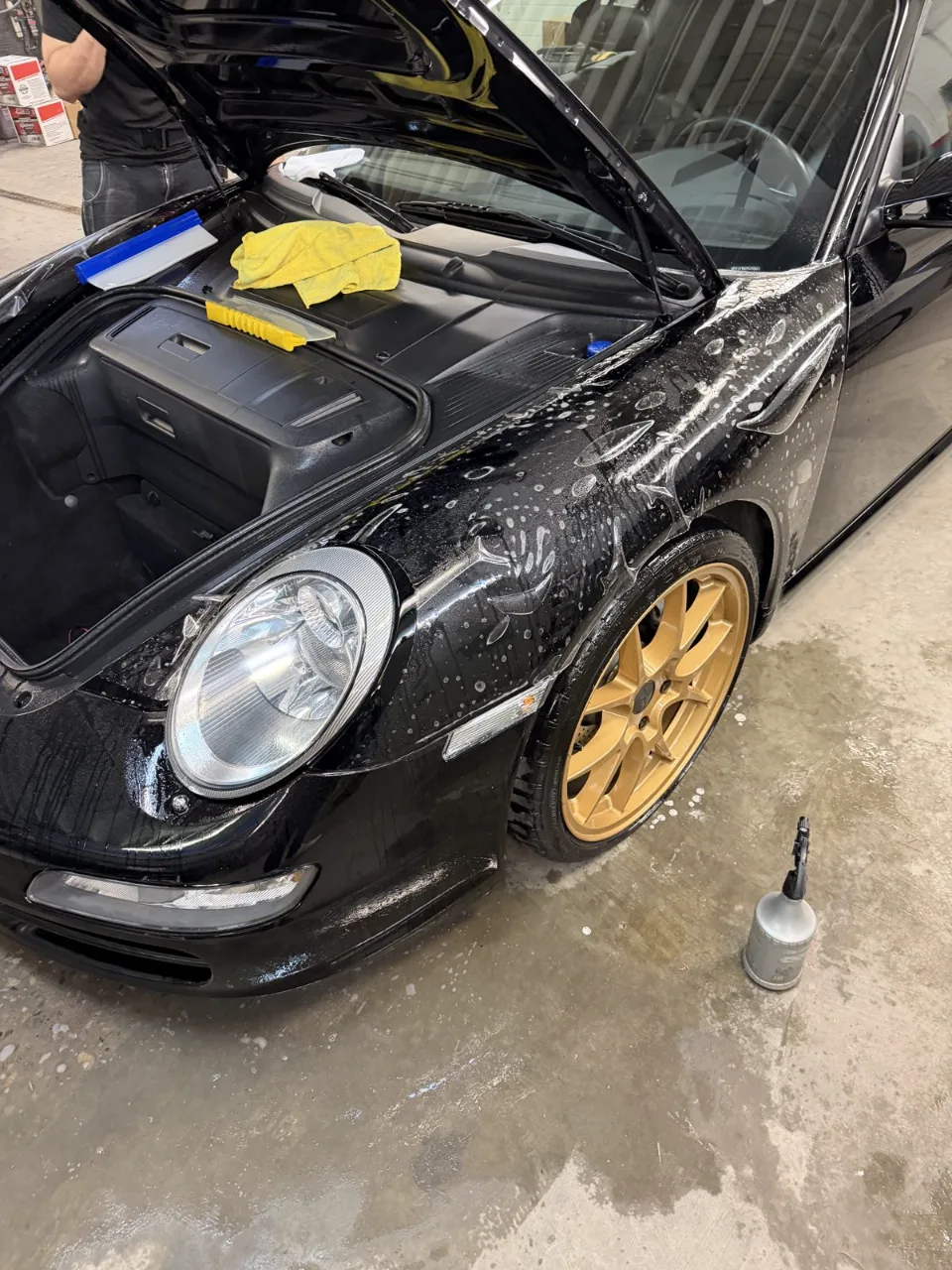
Photo unavailable. Contact us to see more installation work.
Where to next? Pick a subject, or start now.
Start with a coverage option, then add or remove panels to suit your car. Tap one and your build starts with it picked.
Most budget friendly
Coverage level 1 of 4Partial hood: about the first 24 inches, where most chips land.
Starting at $269
Start with 24″ hoodMost popular
Coverage level 2 of 424″ hood and 24″ fenders, front bumper and mirror caps.
Starting at $649
Start with Partial frontFull panels
Coverage level 3 of 4Full hood, full fenders, front bumper and mirror caps. No line across the hood or fenders.
Starting at $879
With A-pillars and front roof strip $1,009
Start with Full frontGloss, satin or matte
Coverage level 4 of 4Every painted panel: hood, fenders, front bumper, mirror caps, A-pillars, roof, full doors with door cups, rocker panels, the rear wheel impact areas, quarter panels and rear bumper. In gloss, satin or matte, all the same price. Grille, flares, lights and skid plate stay optional add-ons.
Starting at $5,495
SUVs and vans $6,495
Pickup trucks $7,995
Start with Complete coverageOr build your own: pick any panels on the Build page.
Front bumper on its own: starting at $399. Starting prices in CAD, before GST. Every listed model has its own price: pick yours on the Build page to see it. We confirm the fit on your vehicle before you book. Prices subject to change without notice. A price is locked in only when a deposit is paid or an appointment is confirmed.
Your vehicle’s size and complexity set its price. Larger vehicles need more film; complex design elements take more time. We’ve priced out hundreds of vehicles and keep updating our transparent pricing. Below are examples of what you might expect, by size; every listed model has its own price on the Build page. If you want to know exactly what your car will cost, try our builder.
| Vehicle size | 24″ hood | Partial front | Full front | Front bumper |
|---|---|---|---|---|
| Compact care.g. Honda Civic Sedan · 26 priced | $269–$279 | $649–$729 | $879–$999 | $399–$539 |
| Midsize care.g. Toyota Camry · 16 priced | $299 | $649–$739 | $889–$1,029 | $409–$559 |
| Small SUVe.g. Mazda CX-30 · 31 priced | $269–$279 | $649 | $879–$929 | $399–$449 |
| Compact SUVe.g. Honda CR-V · 40 priced | $279–$289 | $649–$689 | $899–$1,009 | $409–$499 |
| Compact SUV, complex bumpere.g. Toyota RAV4 · 2 priced | $279 | $719 | $1,019 | $549 |
| Midsize SUV (two rows)e.g. Jeep Grand Cherokee · 31 priced | $299 | $649–$759 | $879–$1,089 | $399–$549 |
| Three-row SUV and minivane.g. Toyota Highlander · 29 priced | $299 | $649–$749 | $989–$1,099 | $419–$549 |
| Full-size SUVe.g. Chevrolet Tahoe · 12 priced | $329 | $1,099 | $1,299 | $629 |
| Mid-size pickupe.g. Toyota Tacoma · 9 priced | $329 | $859 | $1,059 | $399–$439 |
| Full-size pickupe.g. Ford F-150 · 8 priced | $329 | $859 | $1,059–$1,139 | $439–$569 |
Three things set each price: how much film the panel takes, how complex the vehicle is, and how long the installation takes. Size is the biggest factor, but it isn’t the only one.
Complete coverage: cars $5,495, SUVs and vans $6,495, pickup trucks $7,995. Sports cars and heavy-duty trucks are quoted after we see the vehicle, as are a few models and trims. We confirm the fit before booking.
Compare the same coverage before you decide. Build your price online, see what’s included and understand how we support your installation.
Coverage
AskWhich panels, and partial or full? A “front end” can mean a 24-inch hood or the whole hood, fenders and bumper.
HereEach panel is listed on the Build page, partial or full, with its price.
Film and finish
AskWhich film, in gloss, satin or matte? What does its written warranty cover, for how long, and who handles a claim?
HereGloss: 10-year warranty. Satin and matte, with Complete coverage: 7-year warranty. The written terms come with your quote.
Price and GST
AskIs GST included or added? Is anything marked “quote” or “from”?
HerePrices are in CAD before GST; your build shows GST (5%) on its own line and the total.
Preparation
AskIs a wash, paint check or paint correction included?
HereA simple exterior wash is included, and we check the paint first. Paint correction is extra, and agreed before any work.
Support after
AskWho do you call if an edge lifts or something doesn’t look right? What happens when the film is replaced?
HereYou deal with us directly. When we replace PPF that SUPER AUTOMOTIVE FILM installed, removal is included within five years or 80,000 km driven since installation, whichever comes first.
We promise not to be cheaper than every quote. Compare the same panels, film and support.
Why here? Transparency, honesty and experience. We’re competitive on price, not the cheapest, and easy to get to at 426 Memorial Dr NE.
See every size’s front-end prices under Understand our pricing.
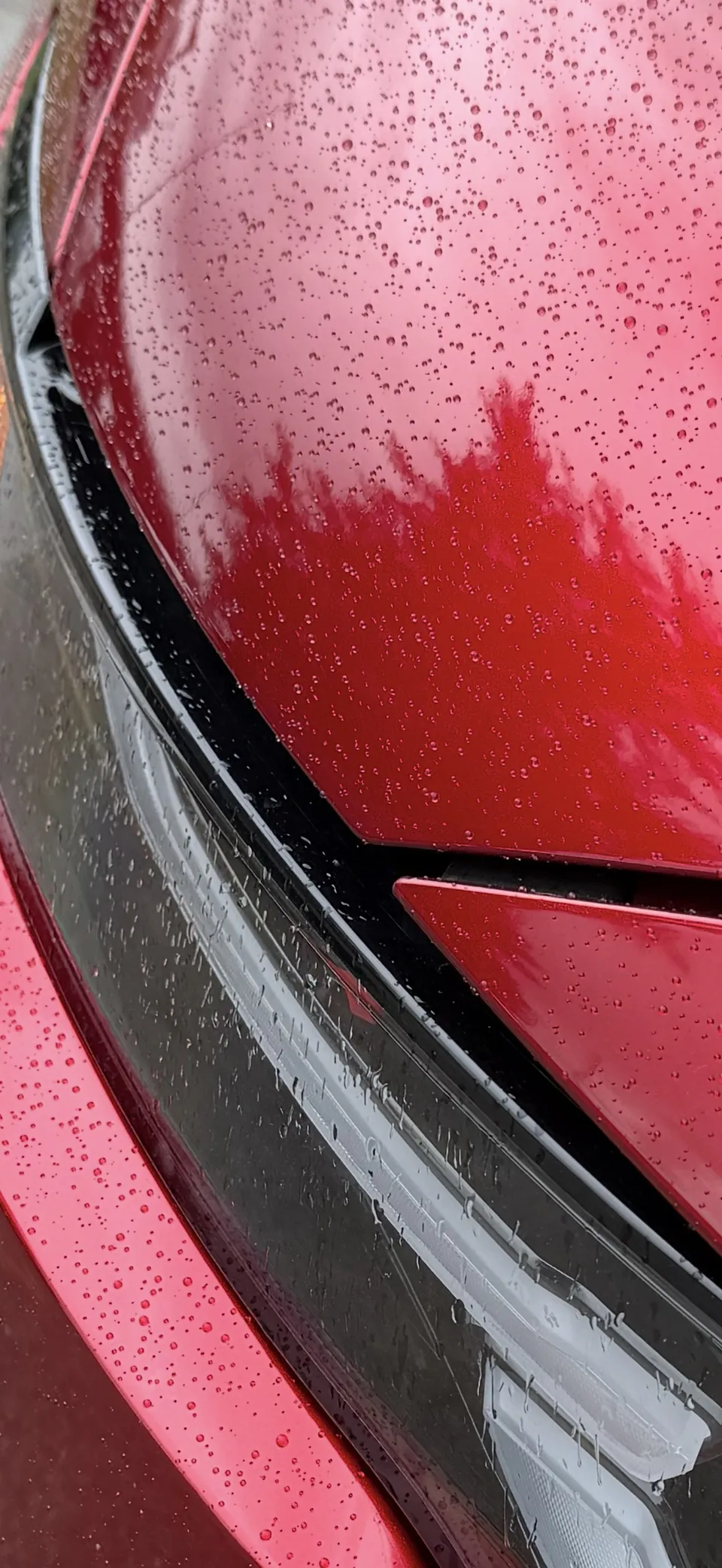
Photo unavailable. Contact us to see more installation work.
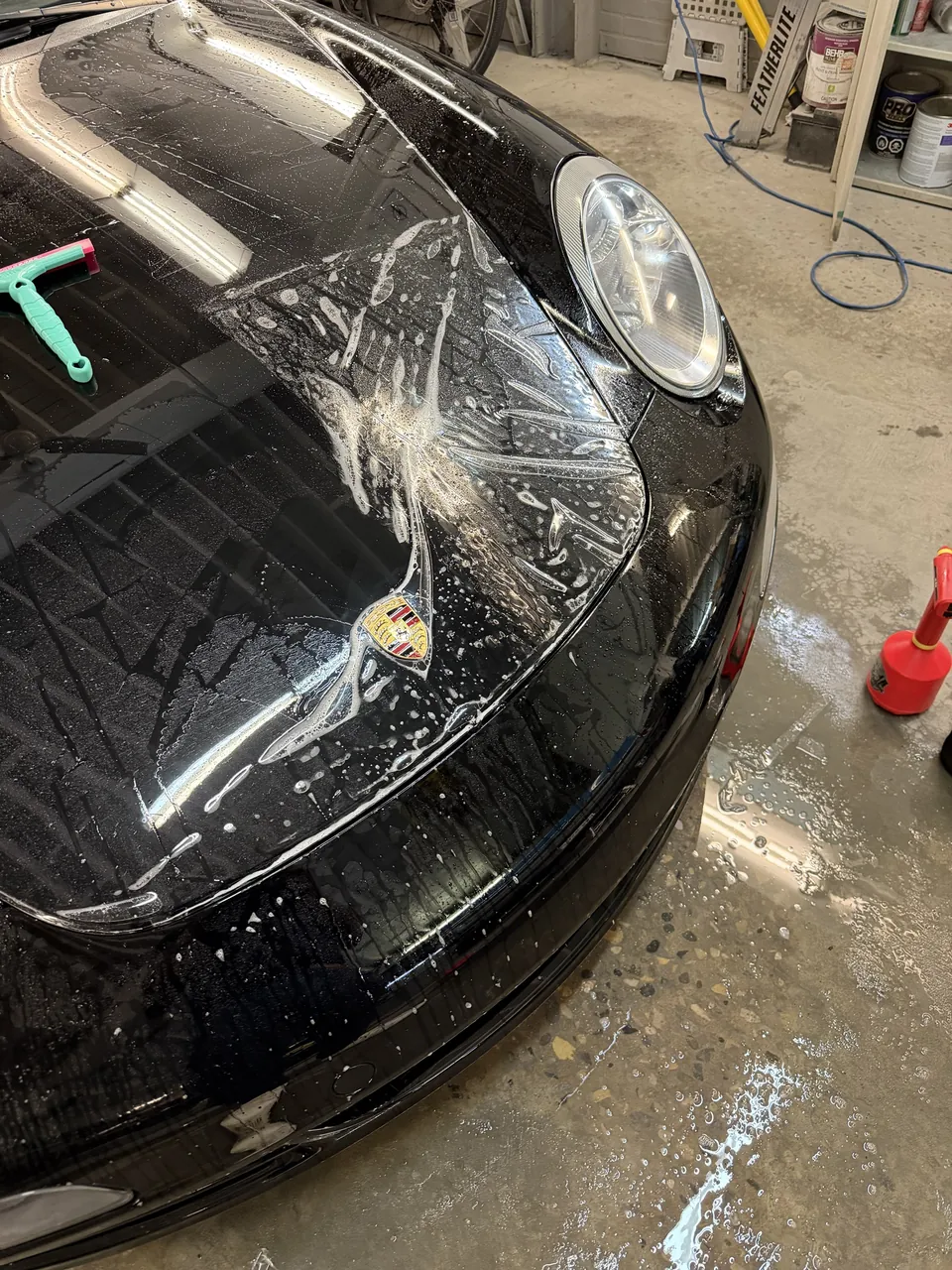
Photo unavailable. Contact us to see more installation work.
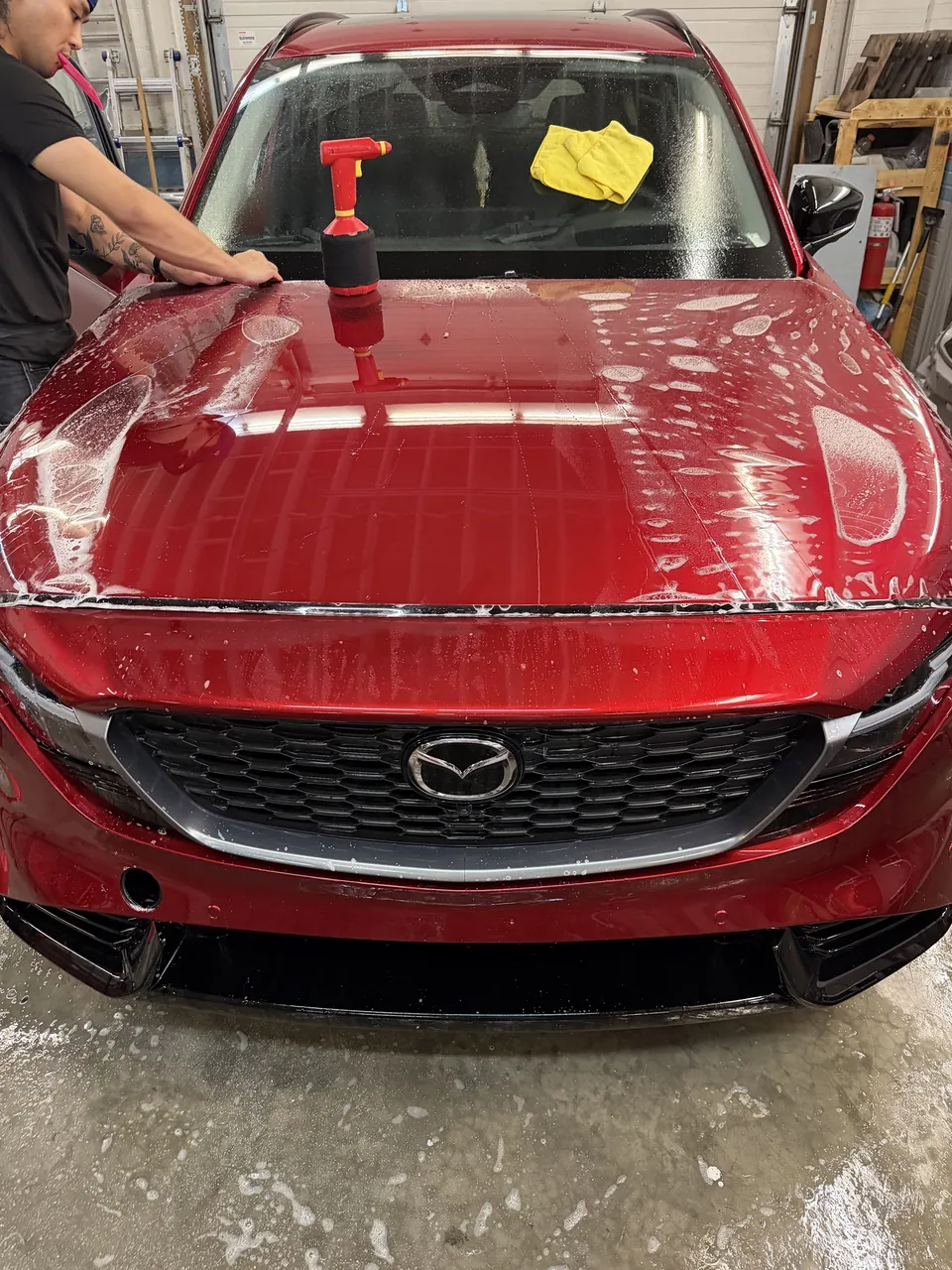
Photo unavailable. Contact us to see more installation work.
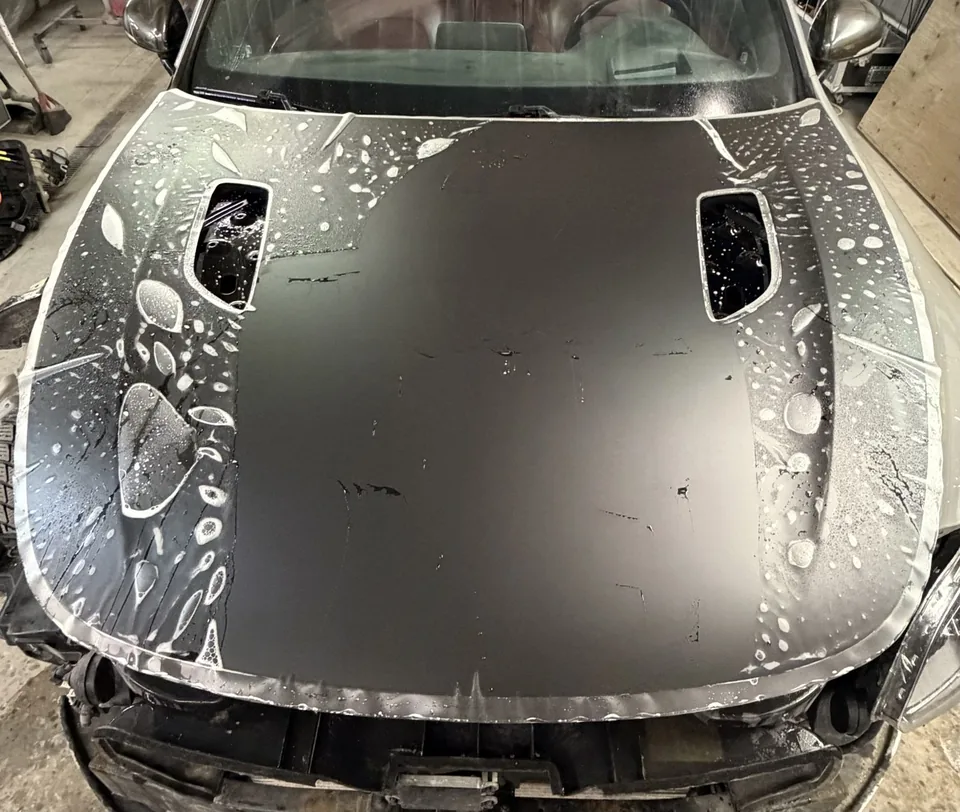
Photo unavailable. Contact us to see more installation work.
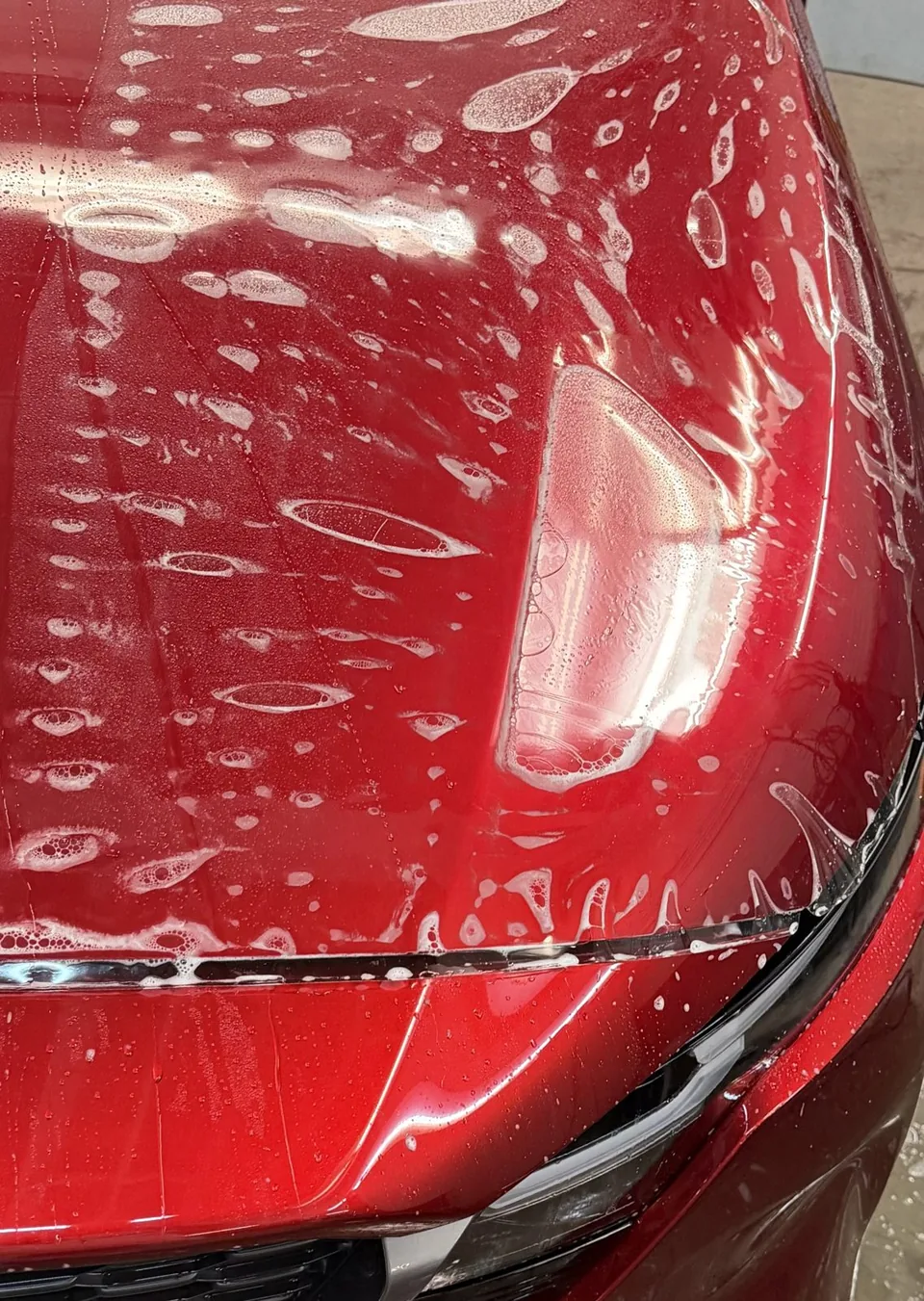
Photo unavailable. Contact us to see more installation work.
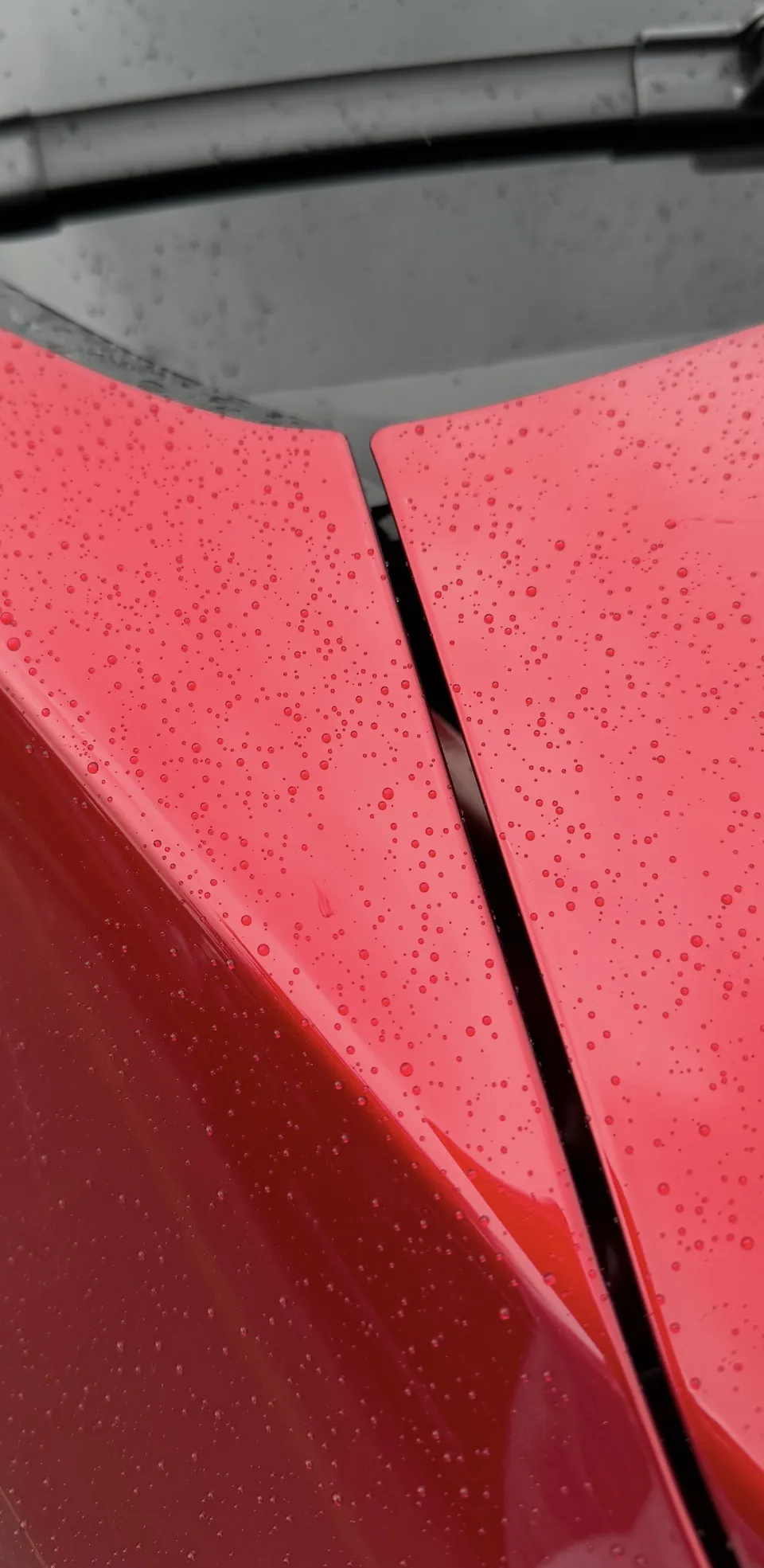
Photo unavailable. Contact us to see more installation work.
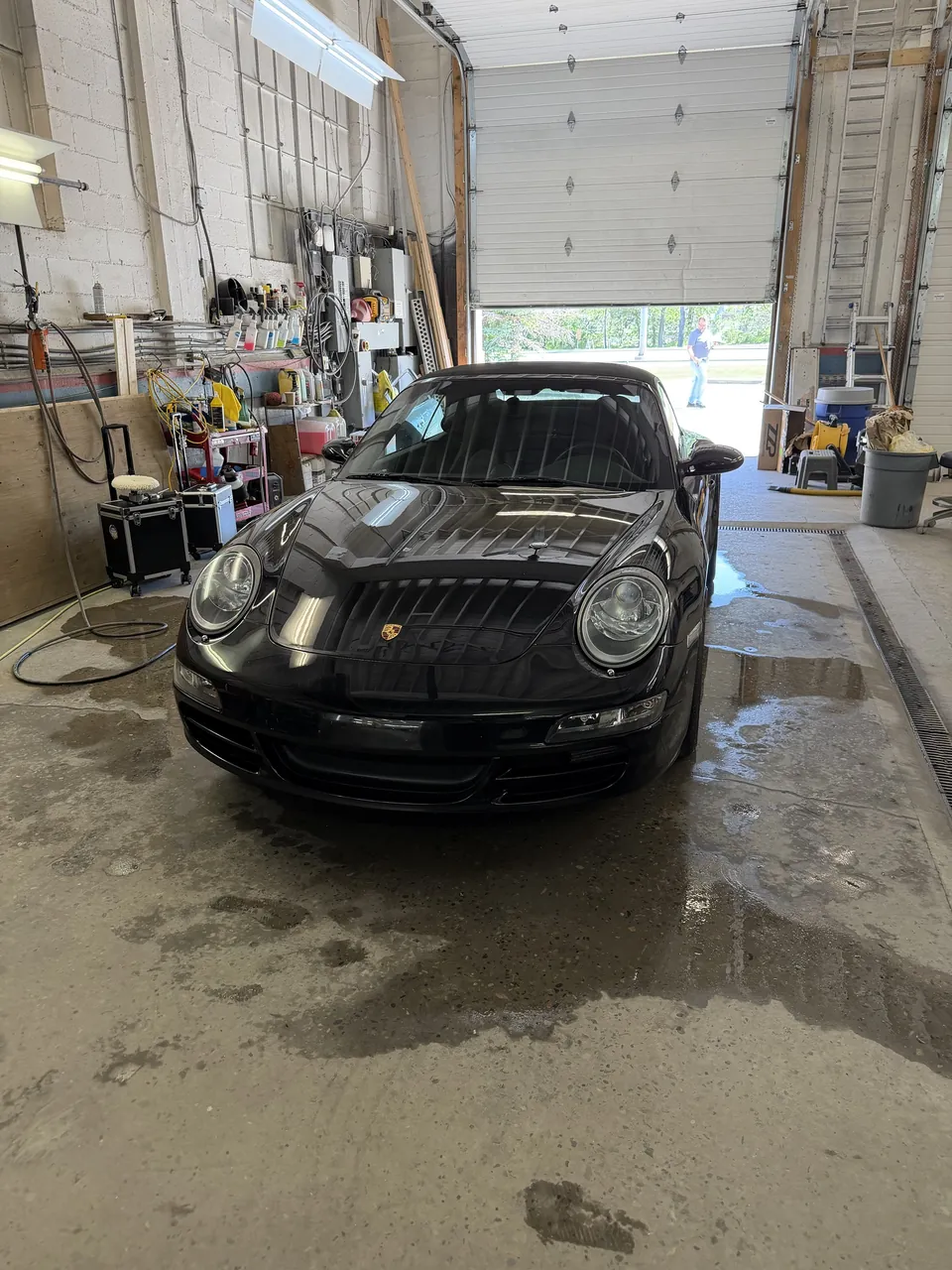
Photo unavailable. Contact us to see more installation work.
Why: Clear film that takes stone chips, gravel and road grit, while your paint colour shows through.
Good to know: It doesn’t hide chips, scratches or failing clear coat that are already there. We check the paint first.
Pick what fits your driving. Bigger isn’t automatically better for you, and you see each price before you decide.
Partial front covers where most chips land. Full front adds no line across the hood and fenders.
Windshield protection film adds a clear, replaceable layer. The glass can still chip or crack under it.
Window tint adds shade and cuts glare. Darker isn’t automatically better at keeping heat out: that depends on the film.
Full front protects the whole front panels. Complete coverage does every painted panel. More coverage protects more areas; it isn’t required.
Satin and matte change the finish. They come with Complete coverage, at the same price as gloss, and aren’t a higher level of protection.
A 24″ hood or Partial front covers the most-hit areas for less. You can add panels on the Build page.
Photos of our partial installs are on the way. Until then, this drawing shows where partial film goes.
Why: Covers about the first 24 inches of the hood and fenders, where most chips land, for less. It can suit a budget or a workhorse.
Good to know: The film ends in a roughly straight line, which can show on light or very clean paint.
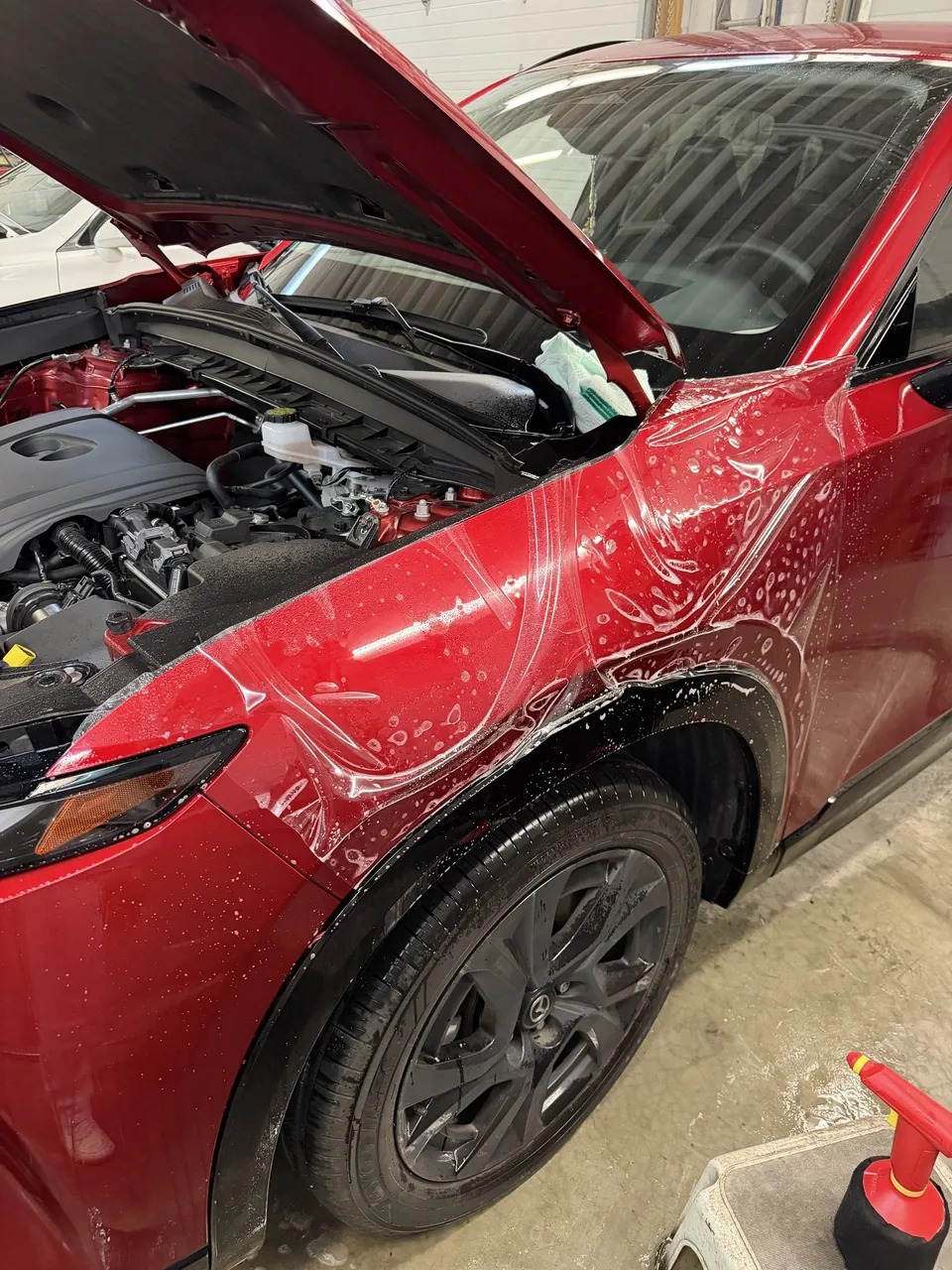
Photo unavailable. Contact us to see more installation work.
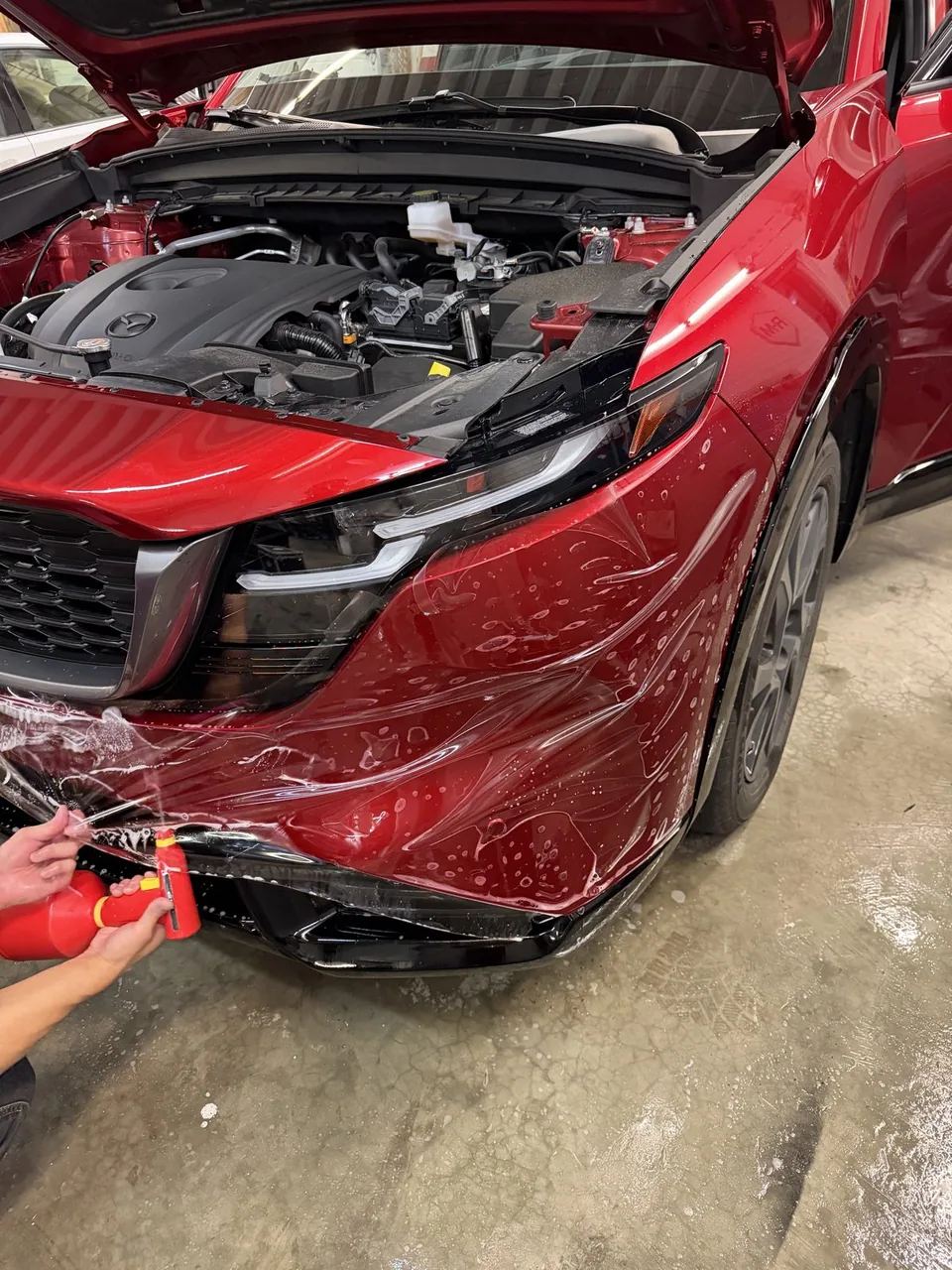
Photo unavailable. Contact us to see more installation work.
Why: Film runs across the whole panel, so there’s no line across the hood or fenders.
Good to know: It costs more than partial, and film still stops just short of some edges, gaps, badges and sensors.
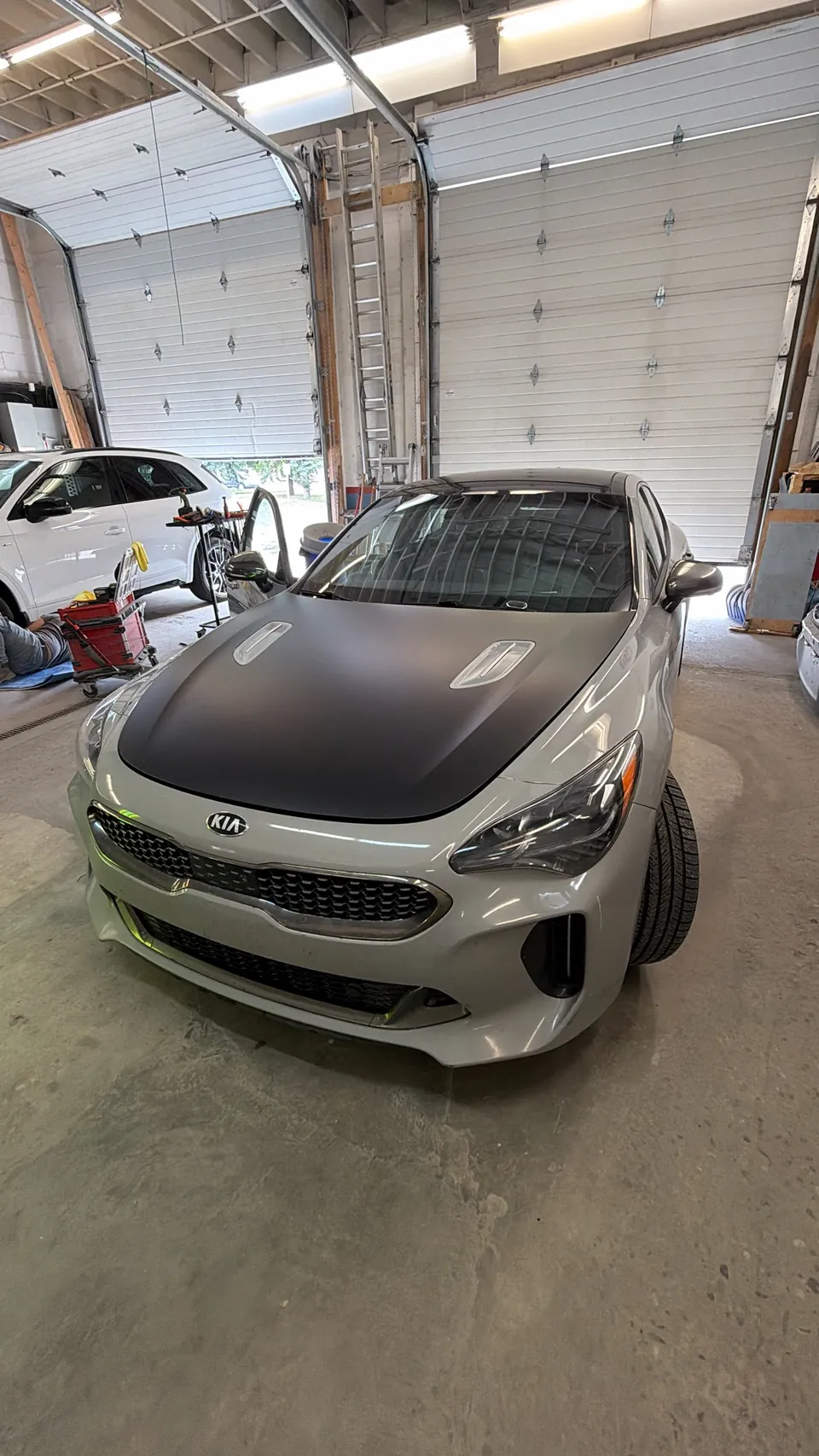
Photo unavailable. Contact us to see more installation work.
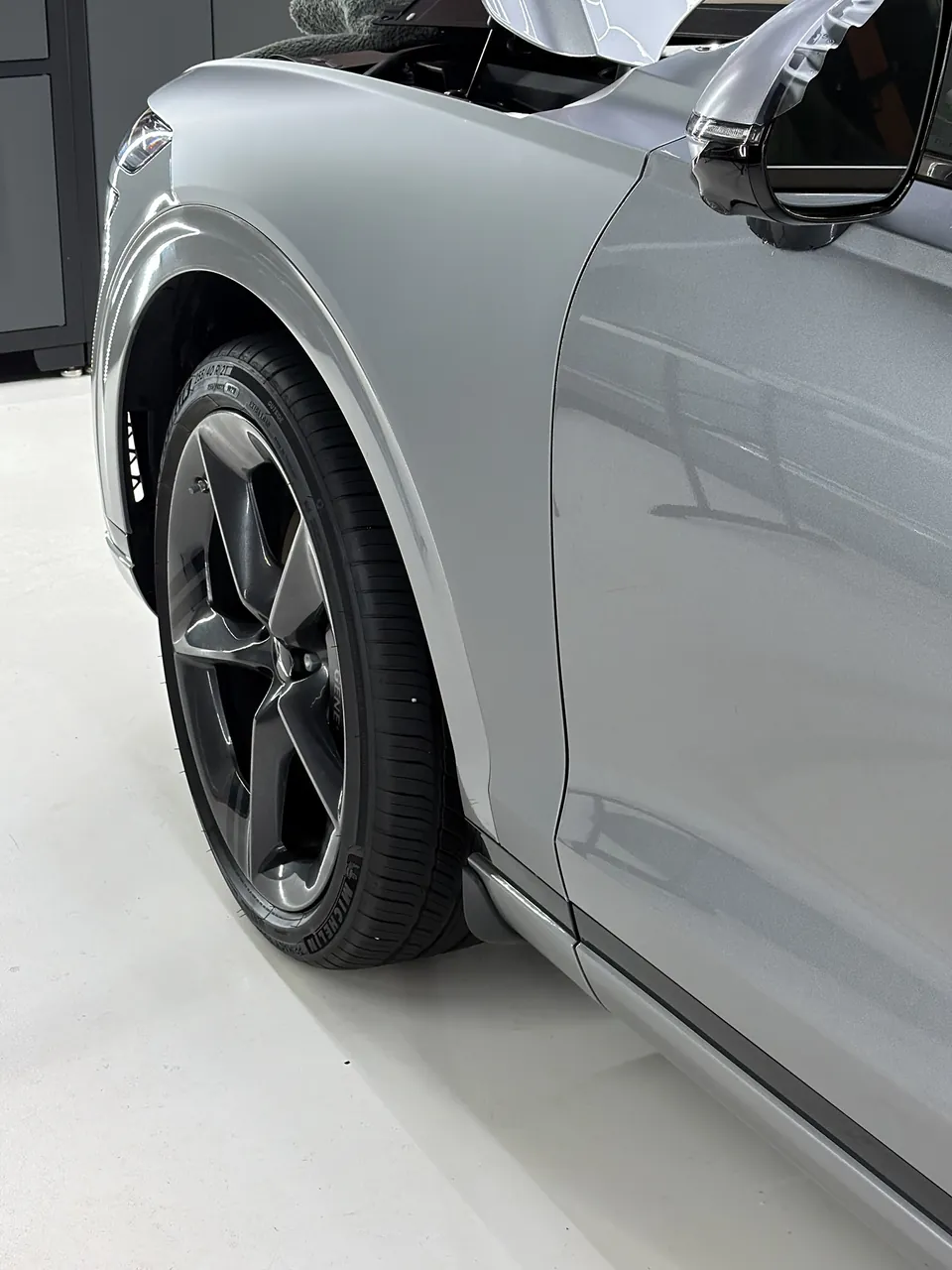
Photo unavailable. Contact us to see more installation work.
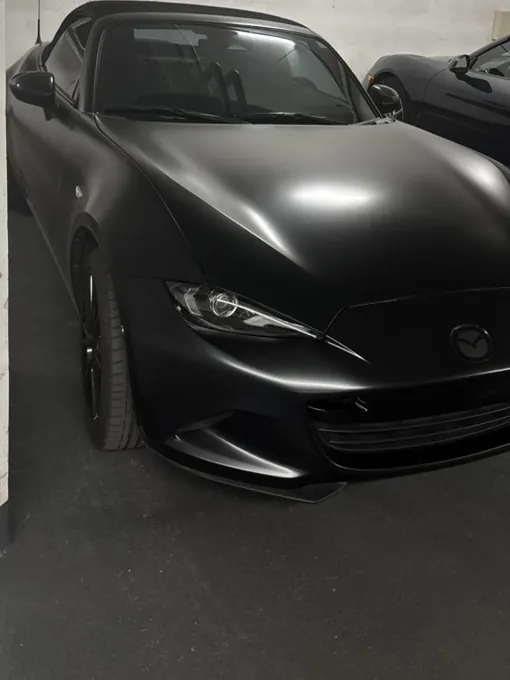
Photo unavailable. Contact us to see more installation work.
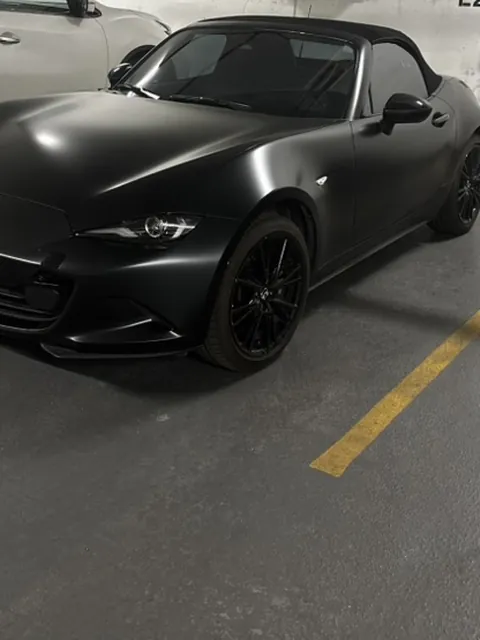
Photo unavailable. Contact us to see more installation work.
Matte: no photos of our matte work yet.
Why: Satin or matte film changes the finish of the panels it covers. It comes with Complete coverage, at the same price as gloss.
Good to know: It’s an appearance choice, not a higher level of protection. Satin and matte carry a 7-year warranty; gloss is 10 years.
These are the choices on the Build page. Complete coverage includes the panels it covers at no extra charge, and the add-ons stay separate.
Every painted panel: hood, fenders, front bumper, mirror caps, A-pillars, roof, full doors with door cups, rocker panels, the rear wheel impact areas, quarter panels and rear bumper. Grille, flares, lights and skid plate stay optional add-ons.
Panel options vary by vehicle. We confirm the fit before booking.
Prices are based on machine-cut kits, which we adjust where practical to improve coverage. Small exposed edges or seams may remain, and not every edge can be wrapped. If you have specific coverage or edge-wrapping expectations, tell us before booking so we can confirm what’s possible for your vehicle.
An edge can lift when film is wrapped where the panel can’t hold it, as panels flex and move on the road, or when a pressure washer gets too close. Swipe through how we decide where to wrap an edge, and where to finish it cleanly.
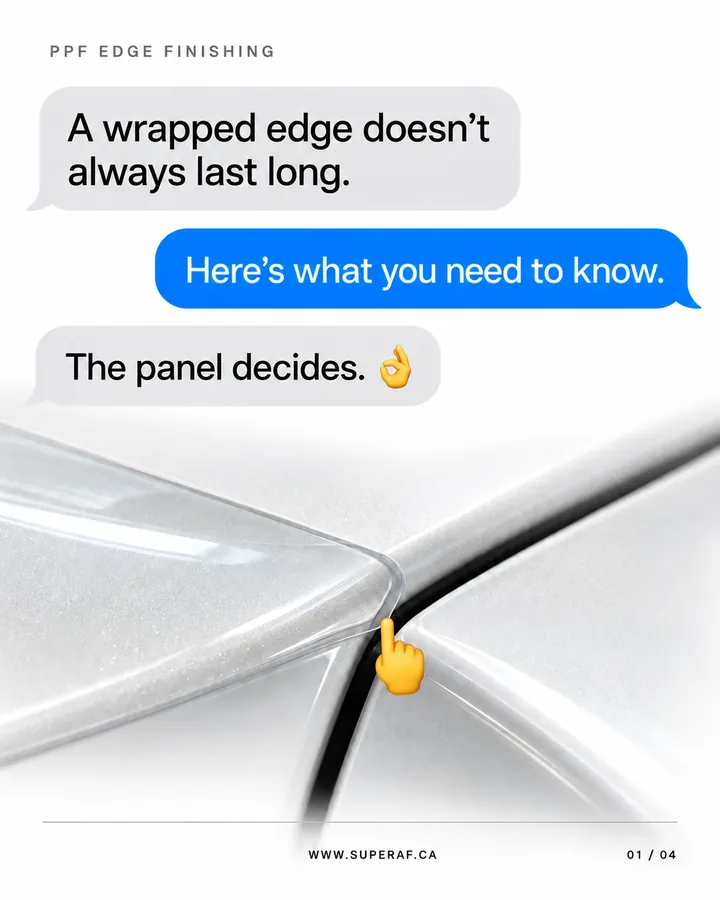
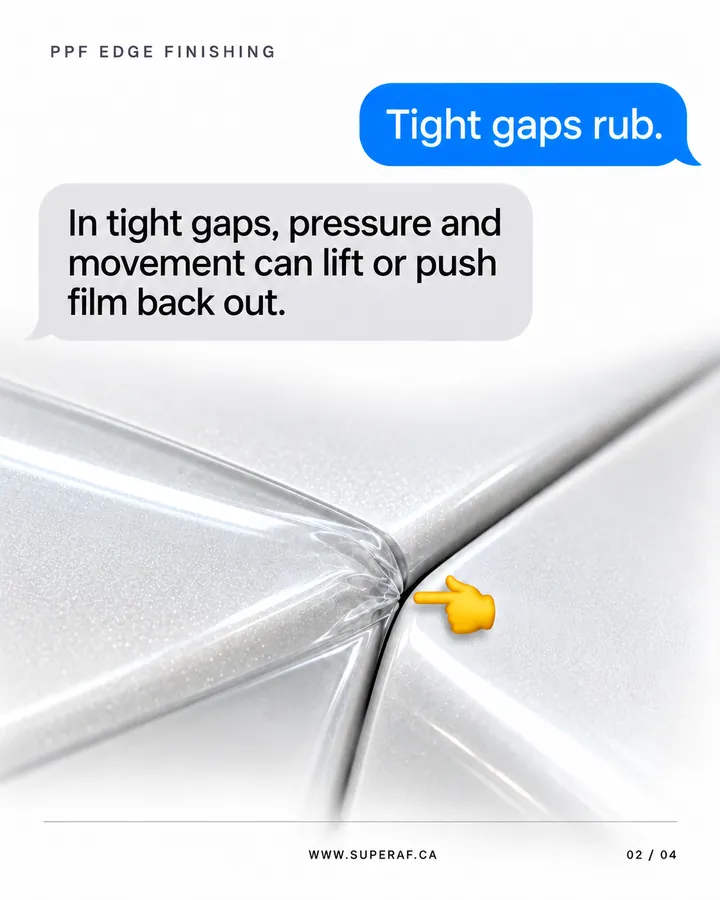
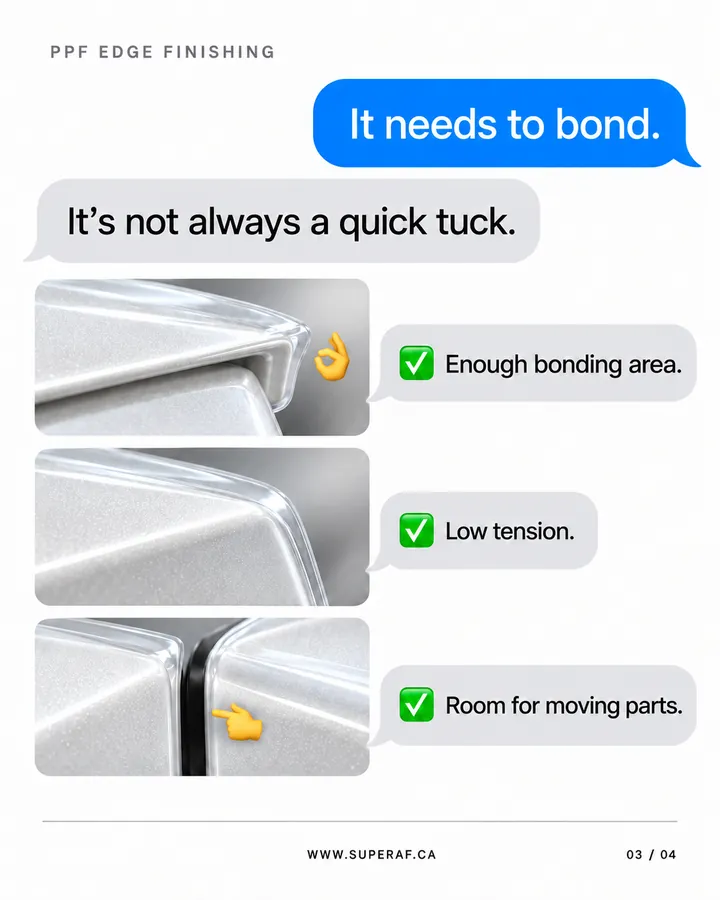
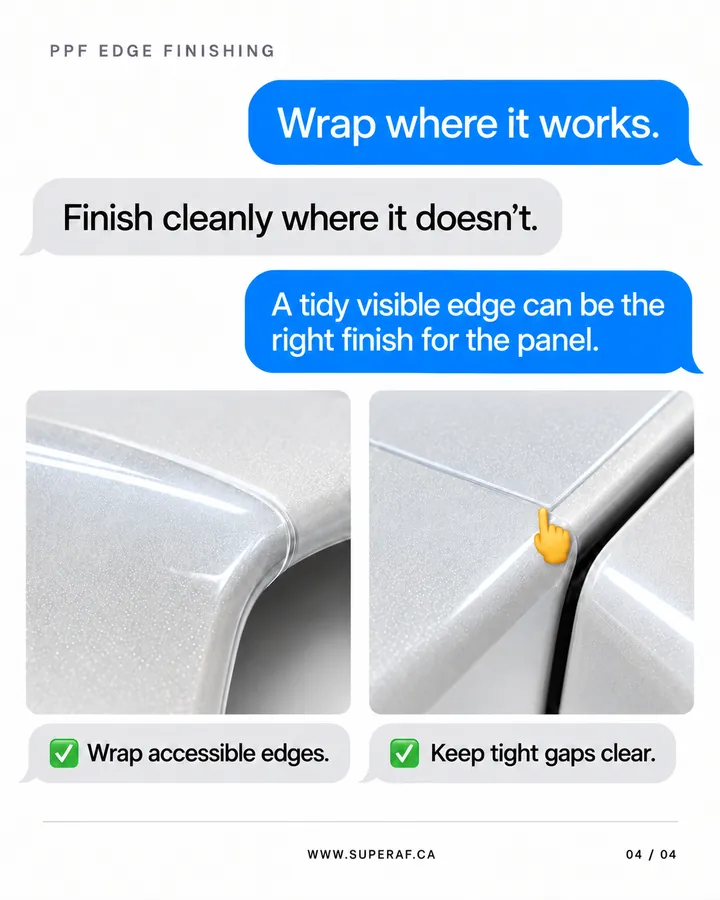
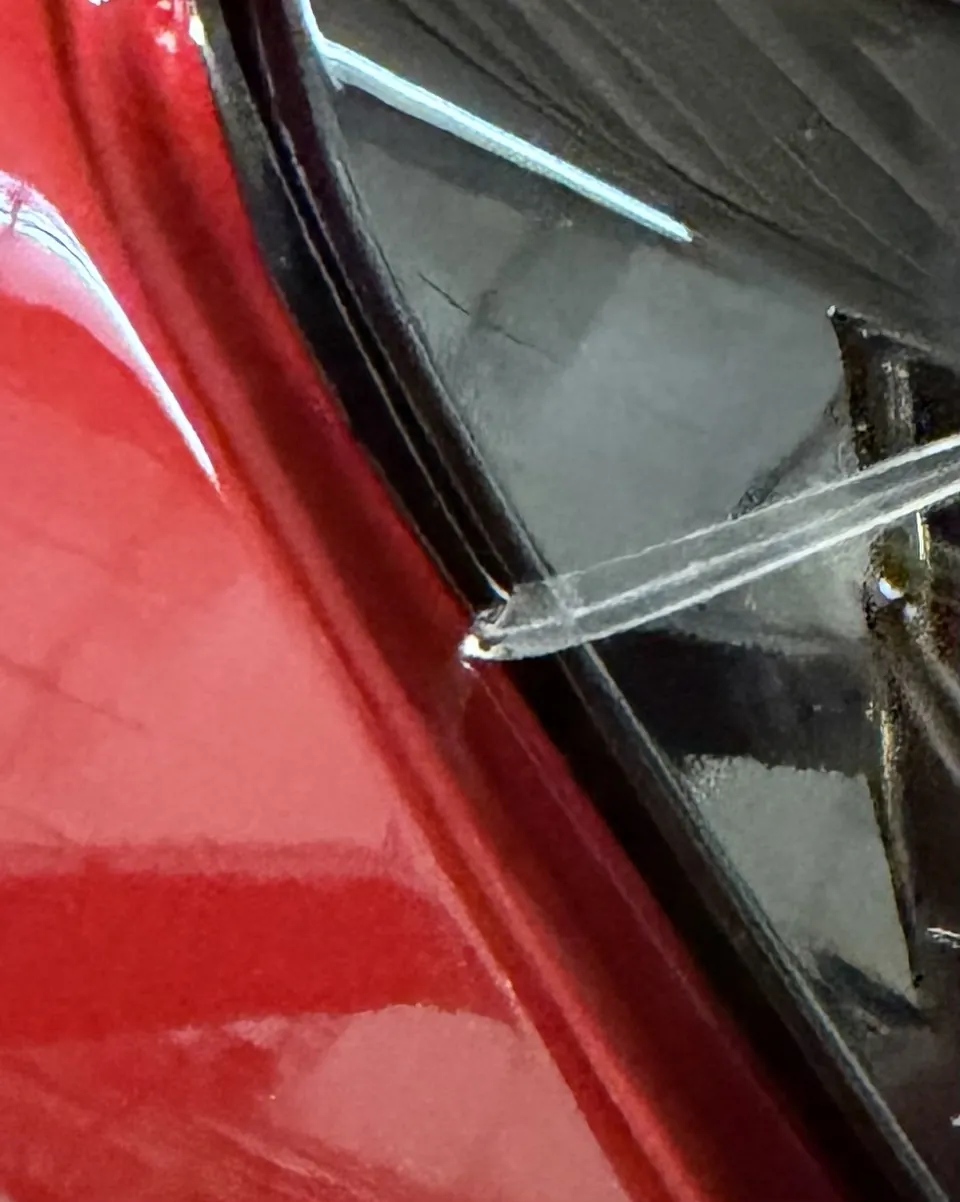
Photo unavailable. Contact us to see more installation work.
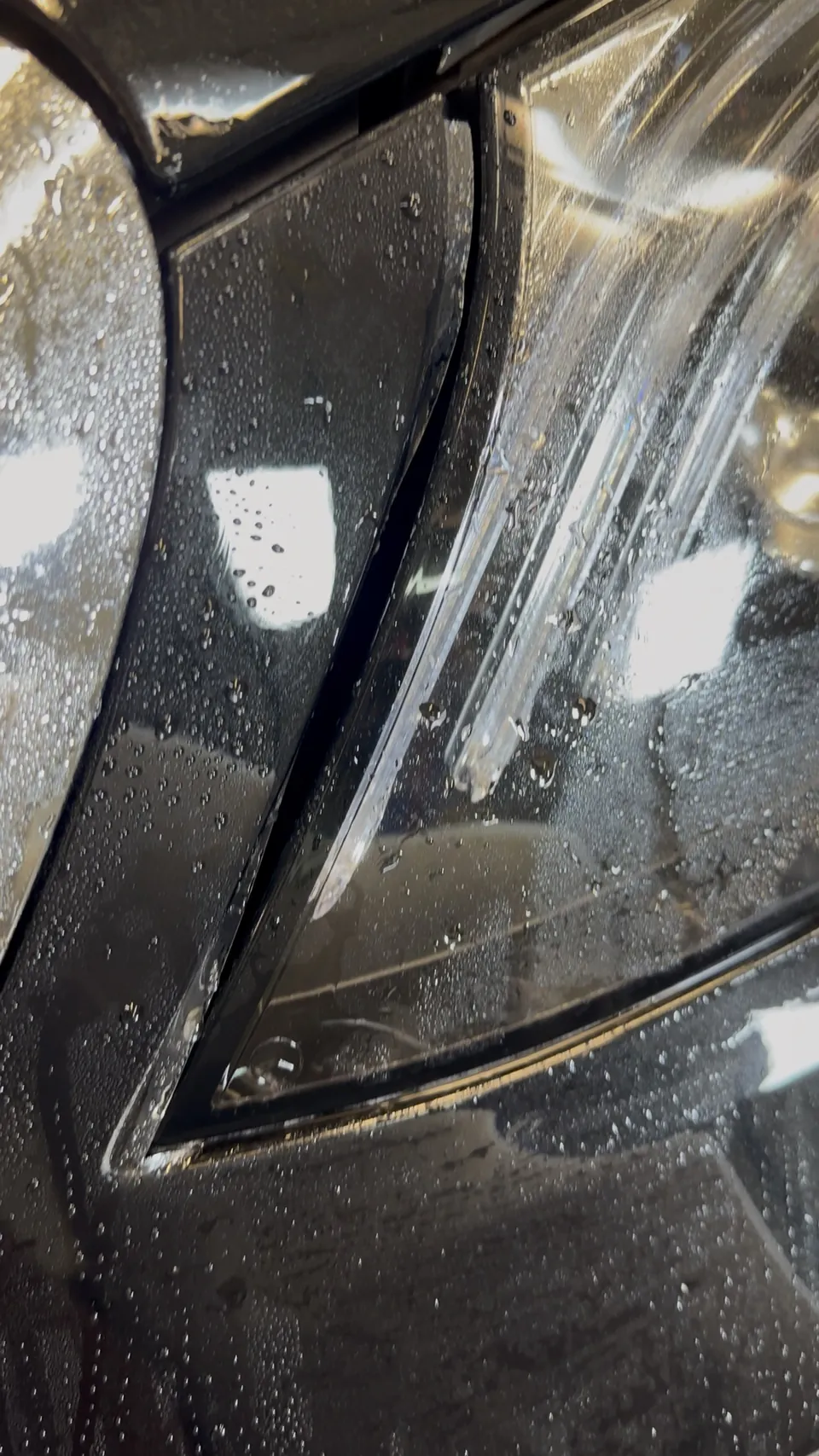
Photo unavailable. Contact us to see more installation work.
Why: Where the panel allows, film wraps around the edge. Where a gap is too tight, we finish the edge cleanly instead.
Good to know: Small edges or seams may remain, and you can sometimes see them up close.
Photo unavailable. Contact us to see more installation work.
Photo unavailable. Contact us to see more installation work.
Photo unavailable. Contact us to see more installation work.
Photo unavailable. Contact us to see more installation work.
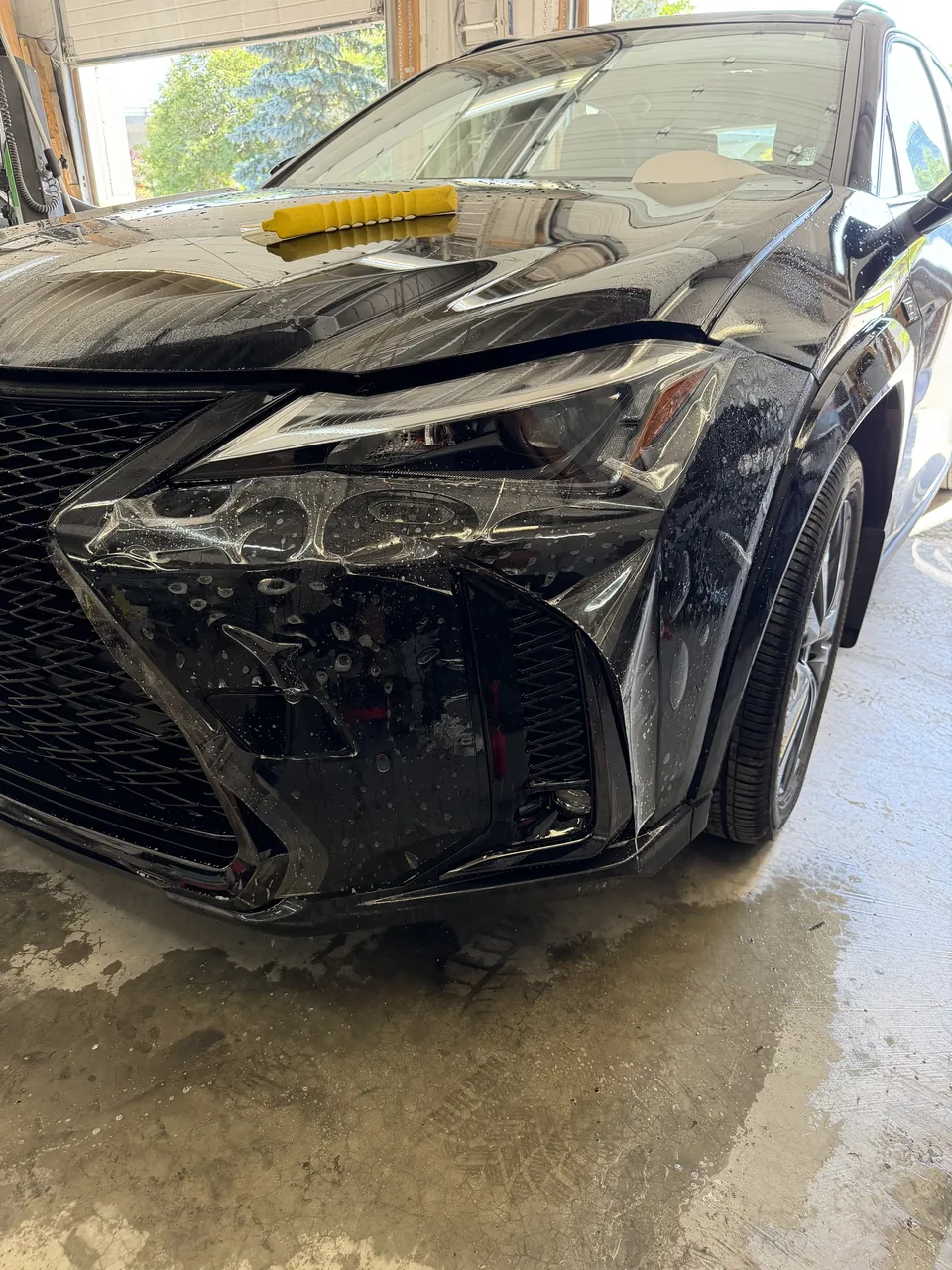
Photo unavailable. Contact us to see more installation work.
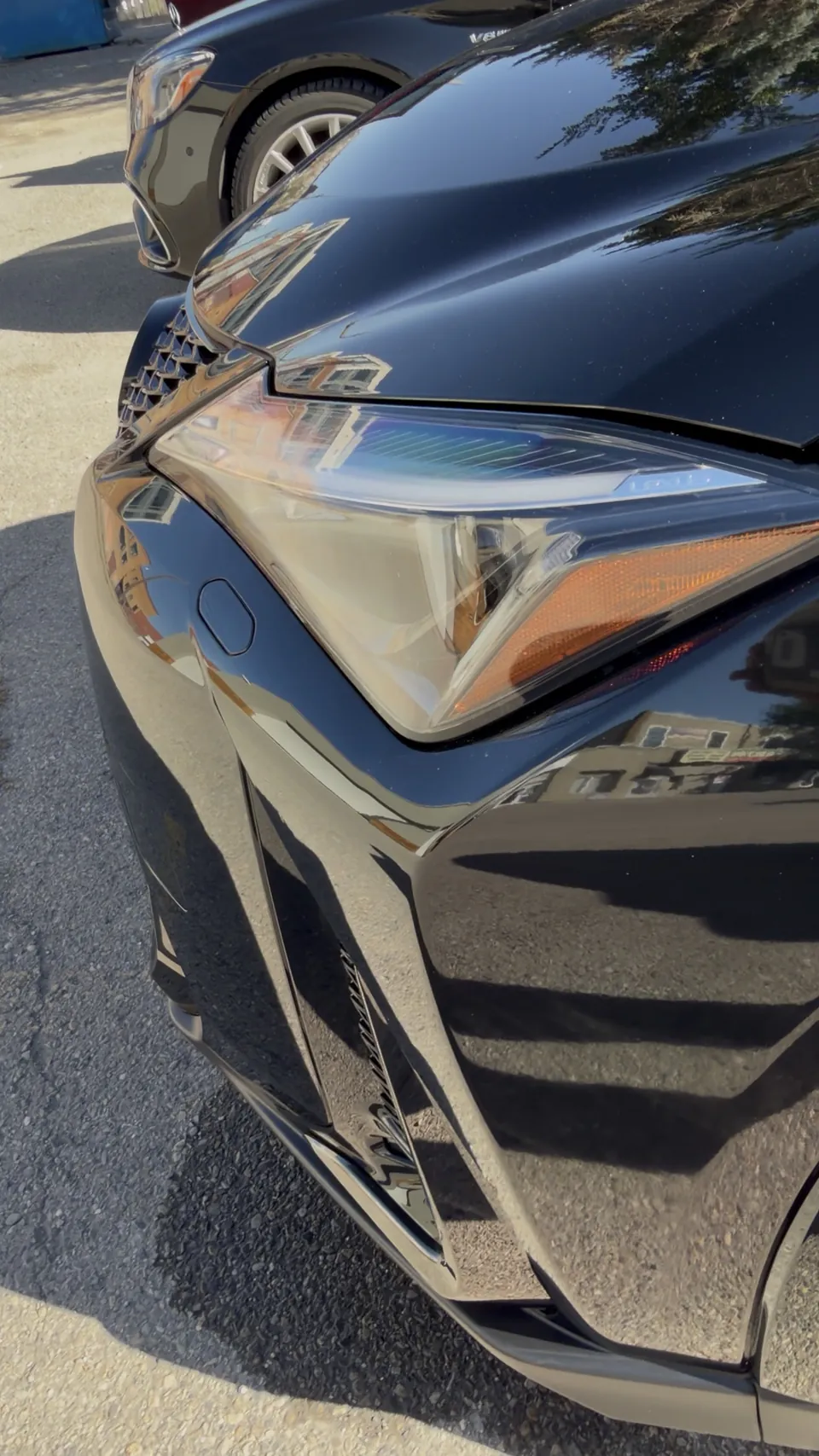
Photo unavailable. Contact us to see more installation work.
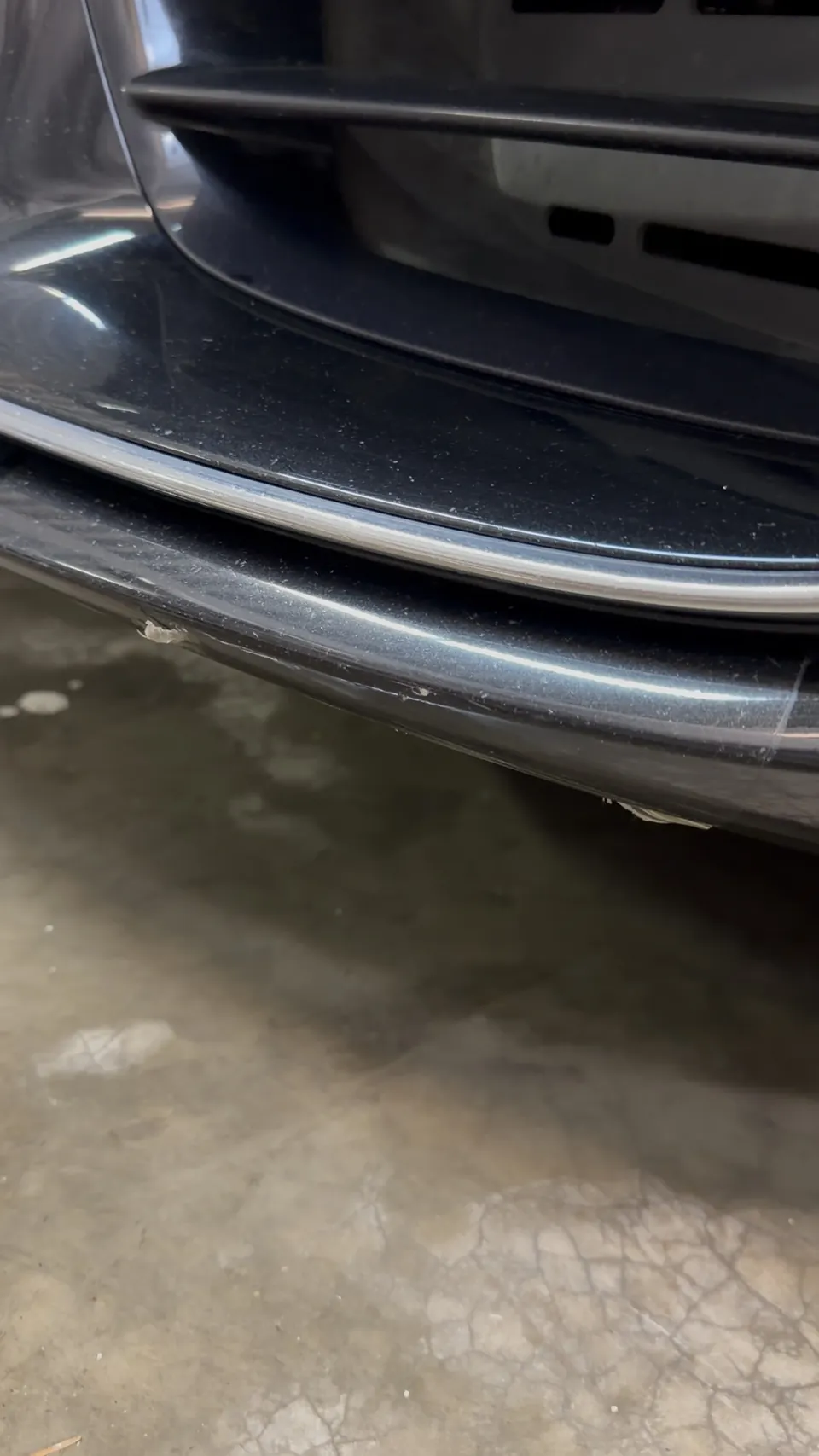
Photo unavailable. Contact us to see more installation work.
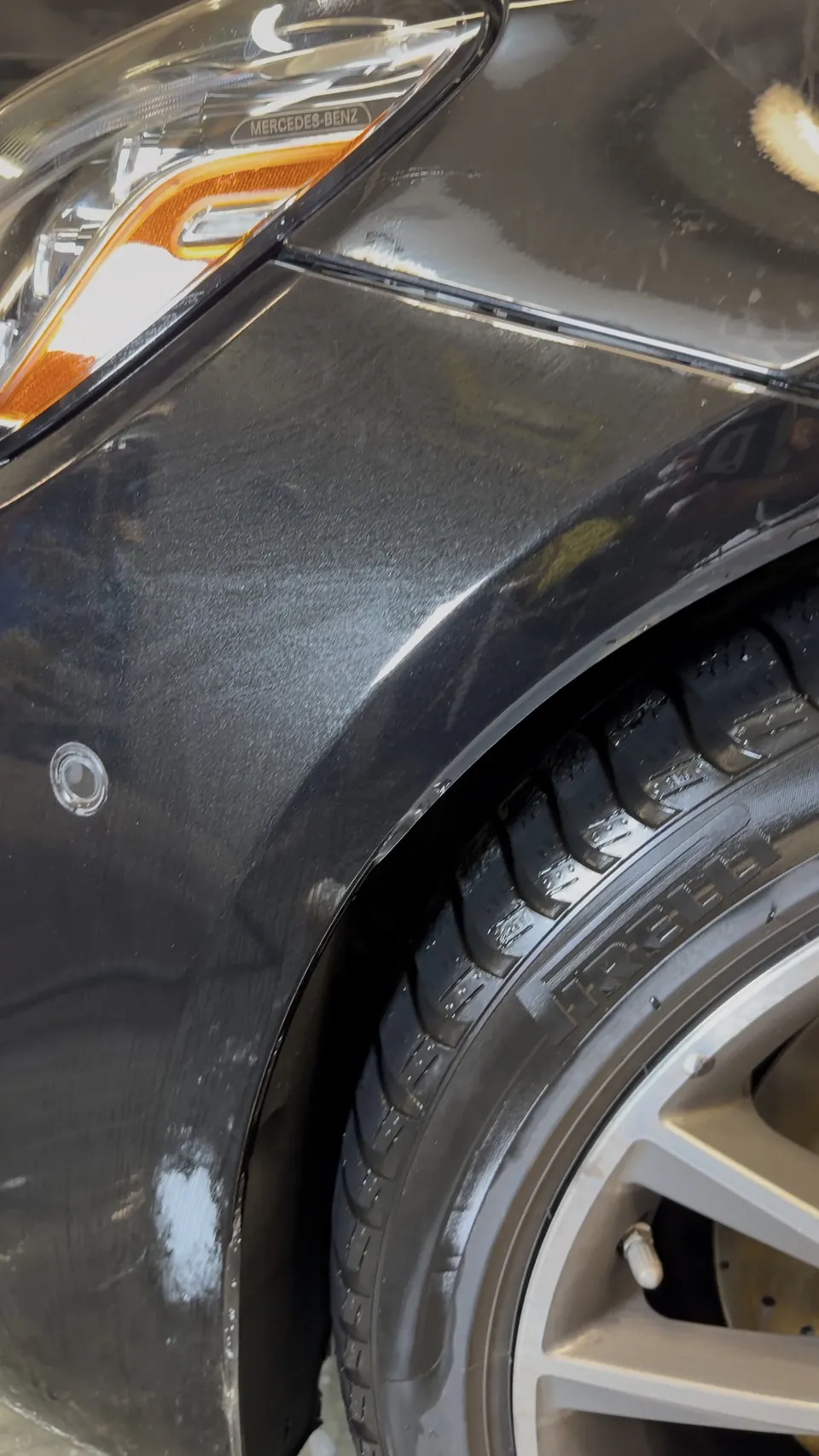
Photo unavailable. Contact us to see more installation work.
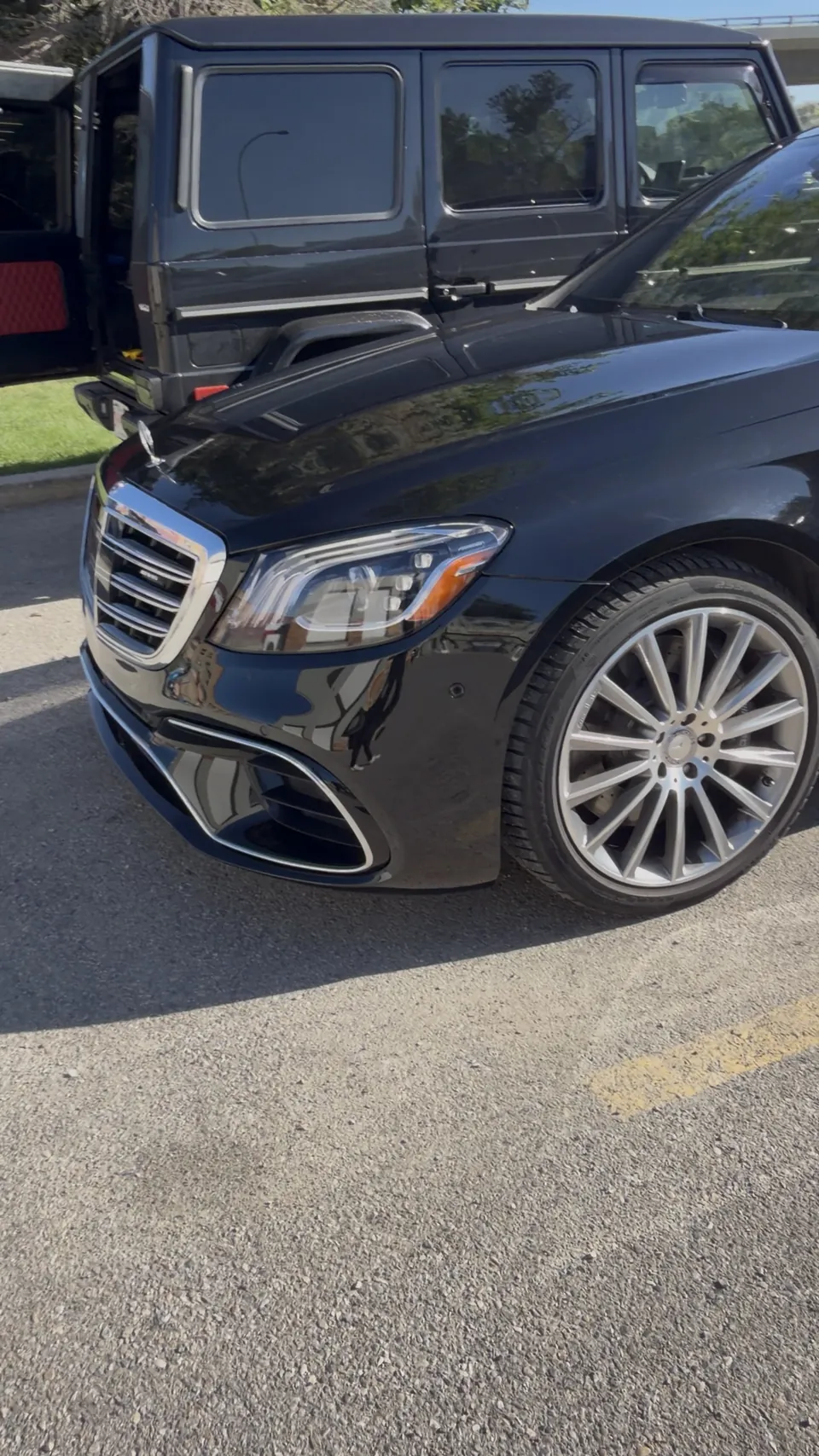
Photo unavailable. Contact us to see more installation work.
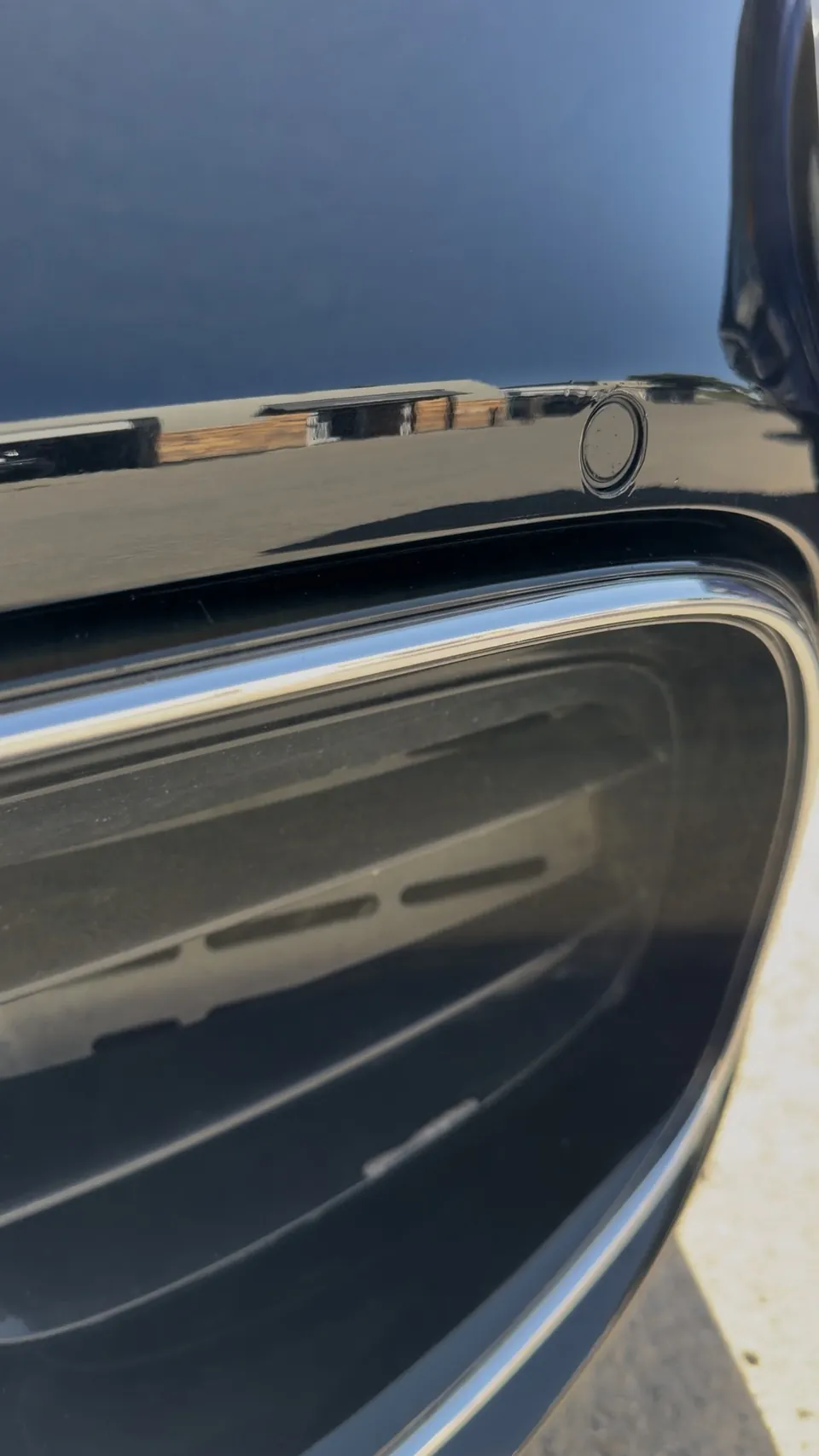
Photo unavailable. Contact us to see more installation work.
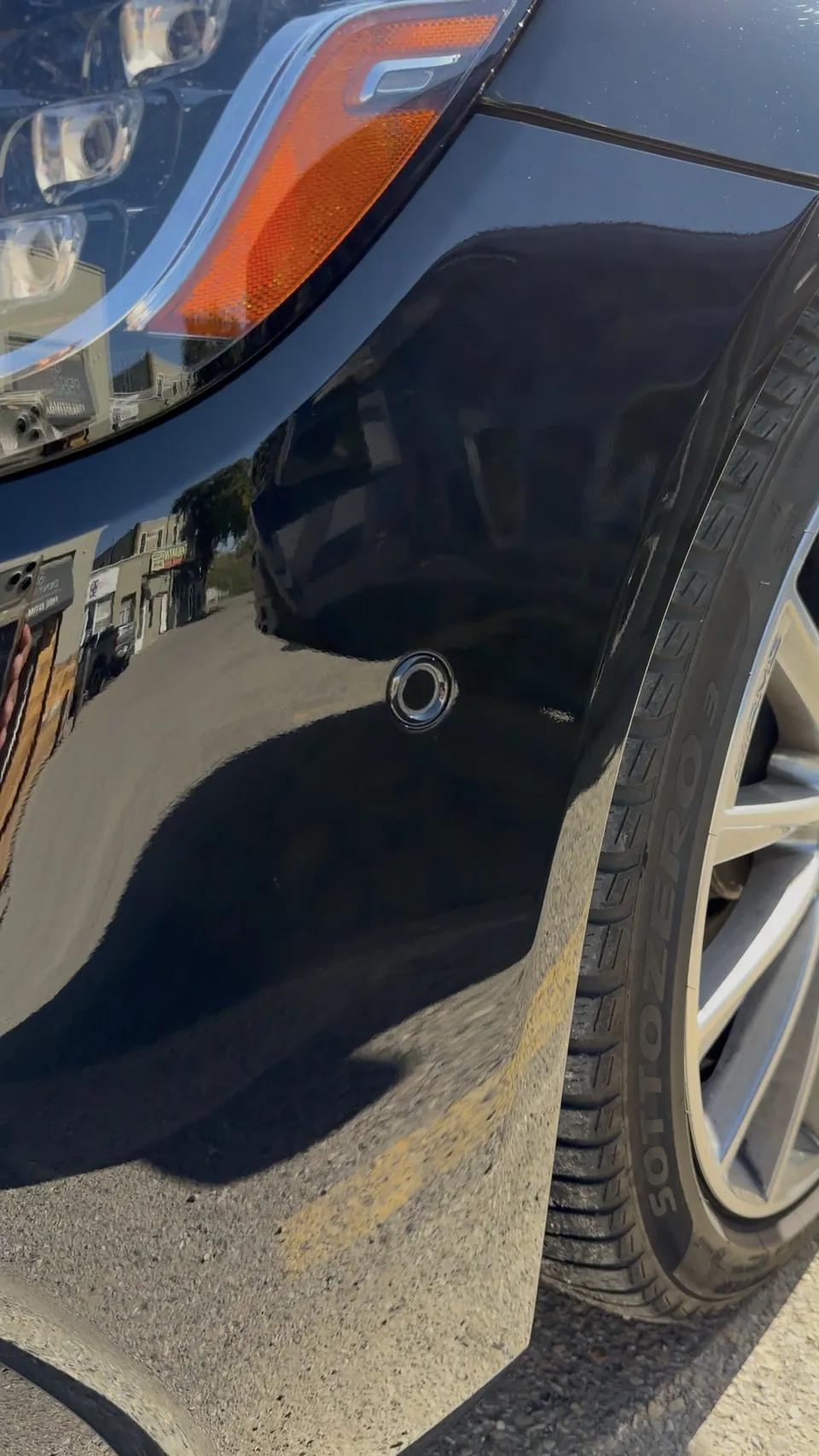
Photo unavailable. Contact us to see more installation work.
Why: Old, yellowed or damaged film comes off, and new film goes on.
Good to know: These photos show the film, not the paint under it, and new film doesn’t repair paint. Removal isn’t priced on the Build page, so ask us.
Our location
426 MEMORIAL DR NE
Calgary, AB
Monday to Friday, 9 am to 6 pm. Saturday and Sunday by appointment. Closed December 24, 25 and 26.
*Seasonal mobile work, depending on availability. Additional location fees apply. Click here for more information.
Listed vehicles have published prices on the Build page. Items marked Quote, and vehicles we don’t list, are priced after we see the vehicle. Either way, we confirm the fit, preparation and final price on your vehicle before you book. Sending your build is a request, not a booking or a payment.
When we replace PPF that SUPER AUTOMOTIVE FILM installed, removal is included within five years or 80,000 km driven since installation, whichever comes first.
We record the installation date and the odometer reading when we install, so the distance is what you’ve driven since then, not the vehicle’s total.
Removal without replacement isn’t part of this benefit. It’s separate from the film’s defect warranty and from any goodwill repair.
Cars, SUVs, minivans and pickups, from Mazda to Porsche. Your vehicle’s size sets its price, and panel options vary by vehicle: we confirm the fit before booking.
Tesla · Rivian · Ford · Chevrolet · GMC · Buick · Toyota · Honda · Hyundai · Kia · Nissan · Mazda · Subaru · Volkswagen · Chrysler · Dodge · Jeep · Ram · Mitsubishi · BMW · Mercedes-Benz · Audi · Lexus · Acura · Infiniti · Volvo · Porsche · Land Rover · Jaguar · Alfa Romeo, and more.
Models by size, our work by vehicle, and brands coming to Canada
WPF · Clear or tinted
A clear, replaceable layer on your windshield for Calgary gravel and road grit. Clear or tinted, $299 for a standard-size windshield.
It adds protection, but a rock can still chip or crack the glass. It isn’t damage-proof, and it’s a separate service from windshield tint.
426 MEMORIAL DR NE · CalgaryDirections
*Seasonal mobile work, depending on availability. Additional location fees apply. Click here for more information.
Where to next? Pick a subject, or start now.
See it all
ClearCut the glare
70% or 35%Standard-size windshields. Larger glass needs a quote. Prices in CAD, before GST. About a day in the bay.
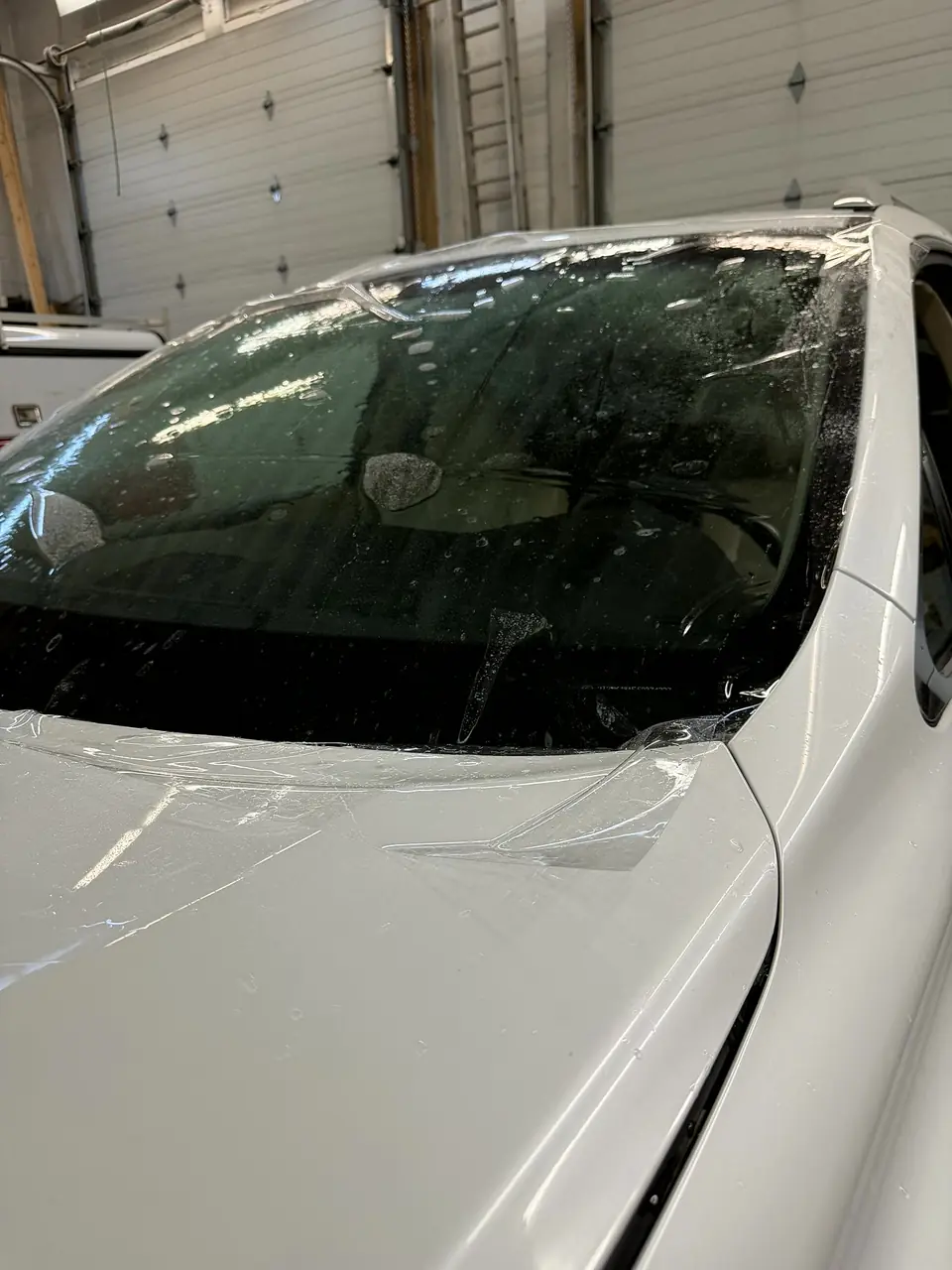
Lay. Tuck. Trim. Finish. These are our own installation photos.
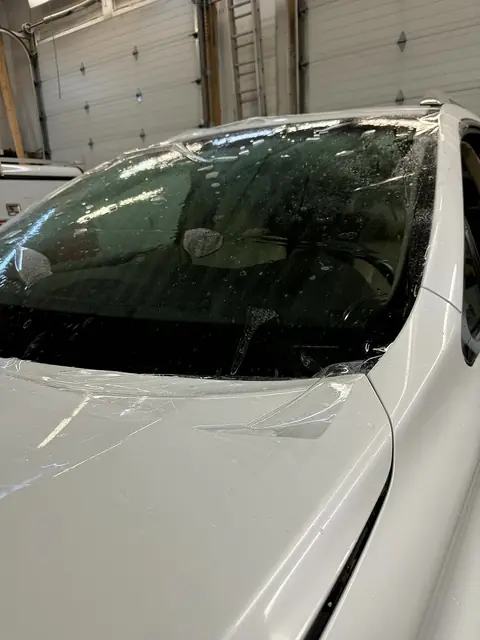
01 Lay Position the film on the glass.
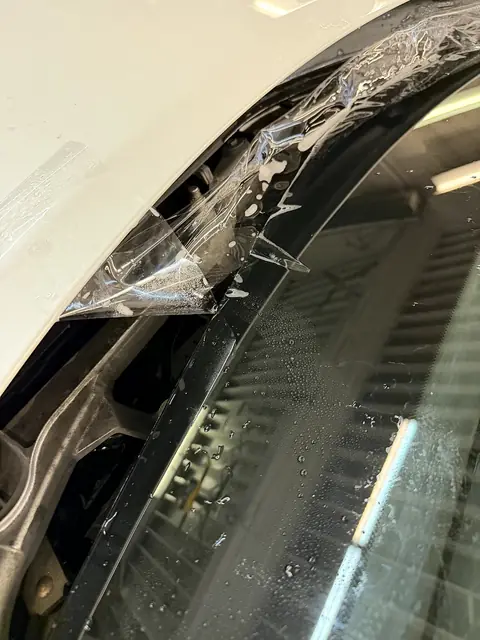
02 Tuck Work it around the edges.
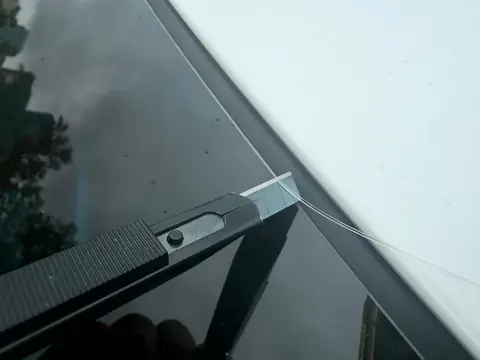
03 Trim Fit it to the edge of the glass.
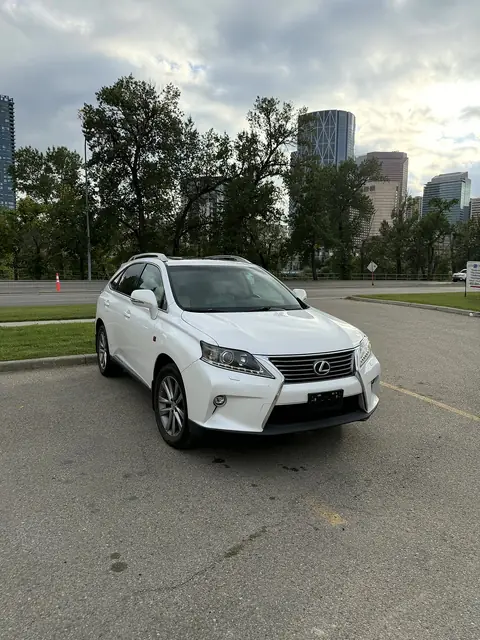
04 Finish Inspect the finished windshield.
There’s no set schedule and no guaranteed lifespan. It’s a wear layer, made to be replaced: how long it stays good depends on your roads, your wipers, winter and care. These are the things to weigh.
Not sure? Bring it in and we’ll look at it with you. During the warranty, removing film we installed is free, even if you don’t want new film; new film is a new installation at the usual price, unless an approved warranty claim covers it.
Limited film warranty: 1 year or 16,000 km, whichever comes first. It covers film defects that cause yellowing, cracking of the film, blistering or delamination.
Our location
426 MEMORIAL DR NE
Calgary, AB
Monday to Friday, 9 am to 6 pm. Saturday and Sunday by appointment. Closed December 24, 25 and 26.
*Seasonal mobile work, depending on availability. Additional location fees apply. Click here for more information.
Carbon or ceramic
Pick your film: Carbon for the look, or Ceramic for comfort. Then your shade. Front and rear windows are priced separately, from $379 for a sedan.
Darker isn’t the same as cooler, and a shade that looks right by day can be hard to see through at night.
426 MEMORIAL DR NE · CalgaryDirections
*Seasonal mobile work, depending on availability. Additional location fees apply. Click here for more information.
Where to next? Pick a subject, or start now.
Cosmetic
4 shadesSolar protection
6 shadesThe comfort: a comfort-focused film.
Sedan from $509
SUV from $609
Choose Ceramic“From” is 2 front side windows plus the rear windows: 3 on a sedan or crew-cab pickup, 5 on most SUVs. The swatches are simulated: lower % is darker.
| Glass | Carbon | Ceramic |
|---|---|---|
| Front side windows, 2 | $179 | $239 |
| Front side windows, 4 | $259 | $339 |
| Rear windows, 3 | $200 | $270 |
| Rear windows, 5 | $250 | $370 |
| Rear windows, 7 | $320 | $460 |
| Visor strip | $89 | $109 |
| Full windshield | $279 | $379 |
About 2 hours for the front windows and 4 for the rear; 2–3 hours for a windshield or visor strip. Windshield tint and windshield protection film are separate services.
Many SUVs, trucks and vans come with factory-tinted rear glass, usually about 20%. Film over it multiplies: 20% glass with 25% film lets through about 5% (20% × 25%).
Appearance comparison only. Matching the front windows to your rear glass is about the look. It doesn’t mean front tint is allowed on public roads.
In Alberta, tinting material isn’t allowed on the windshield or the windows to the left and right of the driver, unless you have a provincial medical exemption. Even then, only clear UV film with a combined visible light transmittance of 50% or more is allowed. This warning, or accepting responsibility for the tint, doesn’t make it road-legal. Alberta’s guidance
Examples assume 20% factory glass. Your glass may differ; the result is approximate.
| Film on the rear | Factory × film | In all |
|---|---|---|
| Carbon 5% | 20% × 5% | about 1% Very dark |
| Carbon 18% | 20% × 18% | about 3.6% Very dark |
| Carbon 25% | 20% × 25% | about 5% Recommended |
| Carbon 36% | 20% × 36% | about 7.2% |
| Ceramic 5% | 20% × 5% | about 1% Very dark |
| Ceramic 14% | 20% × 14% | about 2.8% Very dark |
| Ceramic 21% | 20% × 21% | about 4.2% Recommended |
| Ceramic 32% | 20% × 32% | about 6.4% |
| Ceramic 45% | 20% × 45% | about 9% |
| Ceramic 65% | 20% × 65% | about 13% |
On the Build page, tick “My rear windows already have factory tint”: the 3D car shows an approximate, simulated view of your rear glass, and anything darker than limo shows as limo, the darkest it can show.
The shades above and the 3D car on the Build page are illustrations, not the view through installed film. We make no health or medical claims about tint.
Manufacturer’s limited lifetime film warranty on both films. We give you the film’s written warranty and our installation terms with your quote.
Window tint is installed at your request, and you’re responsible for making sure your vehicle meets the rules where you drive. That responsibility doesn’t make a restricted setup road-legal.
Our location
426 MEMORIAL DR NE
Calgary, AB
Monday to Friday, 9 am to 6 pm. Saturday and Sunday by appointment. Closed December 24, 25 and 26.
*Seasonal mobile work, depending on availability. Additional location fees apply. Click here for more information.
PPF, windshield film and tint
From compact cars to full-size pickups, in Calgary. Your vehicle’s size sets its price: find it below, then search it on the Build page to see every panel.
Your vehicle’s size and complexity set its price. Larger vehicles need more film; complex design elements take more time. We’ve priced out hundreds of vehicles and keep updating our transparent pricing. Below are examples of what you might expect, by size; every listed model has its own price on the Build page. If you want to know exactly what your car will cost, try our builder.
| Vehicle size | 24″ hood | Partial front | Full front | Front bumper |
|---|---|---|---|---|
| Compact care.g. Honda Civic Sedan · 26 priced | $269–$279 | $649–$729 | $879–$999 | $399–$539 |
| Midsize care.g. Toyota Camry · 16 priced | $299 | $649–$739 | $889–$1,029 | $409–$559 |
| Small SUVe.g. Mazda CX-30 · 31 priced | $269–$279 | $649 | $879–$929 | $399–$449 |
| Compact SUVe.g. Honda CR-V · 40 priced | $279–$289 | $649–$689 | $899–$1,009 | $409–$499 |
| Compact SUV, complex bumpere.g. Toyota RAV4 · 2 priced | $279 | $719 | $1,019 | $549 |
| Midsize SUV (two rows)e.g. Jeep Grand Cherokee · 31 priced | $299 | $649–$759 | $879–$1,089 | $399–$549 |
| Three-row SUV and minivane.g. Toyota Highlander · 29 priced | $299 | $649–$749 | $989–$1,099 | $419–$549 |
| Full-size SUVe.g. Chevrolet Tahoe · 12 priced | $329 | $1,099 | $1,299 | $629 |
| Mid-size pickupe.g. Toyota Tacoma · 9 priced | $329 | $859 | $1,059 | $399–$439 |
| Full-size pickupe.g. Ford F-150 · 8 priced | $329 | $859 | $1,059–$1,139 | $439–$569 |
Three things set each price: how much film the panel takes, how complex the vehicle is, and how long the installation takes. Size is the biggest factor, but it isn’t the only one.
Complete coverage: cars $5,495, SUVs and vans $6,495, pickup trucks $7,995. Sports cars and heavy-duty trucks are quoted after we see the vehicle, as are a few models and trims. We confirm the fit before booking.
Every model on the Build page, by size, each with its own partial front and full front price (before GST). Tap a size to see its models. Panel options vary by vehicle. We confirm the fit before booking. Prices are subject to change without notice; a price is locked in only when a deposit is paid or an appointment is confirmed.
Ford Mustang, Chevrolet Corvette Stingray, Chevrolet Corvette E-Ray, Chevrolet Corvette Z06, Chevrolet Corvette ZR1, Chevrolet Corvette ZR1X, Toyota GR86, Toyota GR Supra, Nissan Z, Mazda MX-5, Mazda MX-5 RF, Subaru BRZ, Dodge Charger, Lexus LC, Audi S e-tron GT, Audi RS e-tron GT performance
Ford Super Duty, Chevrolet Silverado 2500 HD, Chevrolet Silverado 3500 HD, GMC Sierra 2500 HD, GMC Sierra 3500 HD, Ram 2500, Ram 3500
Not listed? Use “Don’t see your vehicle?” on the Build page and we’ll look at it and quote it. Brand names identify vehicles only; we’re an independent installer, not a dealer, and not affiliated with or authorized by these manufacturers.
Vehicles we’ve protected, as our own photos show them. A model here means we’ve worked on one, not that every model year or trim has a proven kit.
The two-seat roadster and its retractable-hardtop RF are both on the Build page (2026). As sports cars, they’re priced by quote: pick your panels and send your build, and we confirm the fit and the price on your car.
And more.
New brands on their way, checked October 31, 2026. We haven’t worked on these brands and have no verified kits for them yet. When one arrives, send us the model and we’ll look at it and quote it.
Mobile · May to October for unheated spaces
We can come to you, if your space can hold film. Film is laid wet, in still air, under good light. A clean garage does it. A parking lot doesn’t.
Run the checklist. Eight ticks and mobile is worth booking. Anything short, bring the vehicle to 426 Memorial Dr NE and we do it in the bay, at the same price with no travel to pay.
Tap a line to see why it matters, then tick what’s true for your space. Nothing is sent until you choose to.
Film goes on wet and open. Anything in the air lands on the panel and stays under the film.
Cold slows the adhesive and the slip solution. In a space without regulated heat we may cancel without notice when the weather won’t allow film to work.
We stretch, squeegee and trim from every side of a panel.
Specks, fibres and lift lines show under strong light, which is when we want to see them.
Dust shows as specks under film; wind blows grit onto the wet panel; a draft dries the slip solution unevenly.
That’s how film is positioned. Cardboard or a drip tray helps if the floor matters to you.
Calgary’s Stormwater Bylaw lets only plain water reach a storm drain, so no soap wash on a driveway or street. Without a pressure washer and a floor drain, we can only wipe down the panels we film.
Heat guns and work lights. Water is helpful but not required.
0 of 8. Start ticking.
| Line | Amount | |
|---|---|---|
| Full front, Small SUV | $879.00 | the price on the Build page |
| Travel, 2 h round trip | $180.00 | at $90 an hour |
| Total for the job | $1,059.00 | plus GST |
| Deposit at booking | $648.00 | film $377.24 + plotting $90.00 + travel $180.00, rounded up; credited in full |
| Balance on completion | $411.00 | plus GST on each part when it’s paid |
Prices in CAD before GST. Prices subject to change without notice. A price is locked in only when a deposit is paid or an appointment is confirmed.
Paint protection film is clear. Whatever gets between it and the paint stays there until that panel is redone: a speck of dust, a fibre, a grain of sand carried in on the wind. In the shop the air is controlled, the floor drains, the light is where we want it and the vehicle is washed before it rolls in. Mobile can match that in a good garage. It can’t in a parkade or a driveway, so we don’t try.
Calgary / PPF · WPF · Tint


Representative illustration of the body style. Covered panels show a thin, clear film layer with a bright edge, in the theme’s colour. Use the left and right arrow keys to spin it, or the Front, Side and Rear buttons. Choose coverage in step 2.
Choose your vehicle
Pick one from the line-up
Its paint protection film, windshield film and tint prices show here.
For example “F-150”, “CR-V” or “CX-30 GT”.
229 models
Pictures are representative body shapes. Pick one, then Build this one (or press Enter). For an exact year or trim, use the search above.
Tap a choice or a panel on the vehicle. Partial covers about the first 24 inches.
Gloss film with a 10-year warranty. Satin and matte (7-year warranty) come with Complete coverage. Find out more
Prices are based on machine-cut kits, which we adjust where practical to improve coverage. Small exposed edges or seams may remain, and not every edge can be wrapped. If you have specific coverage or edge-wrapping expectations, tell us before booking so we can confirm what’s possible for your vehicle.
A clear, replaceable layer that takes road wear in place of the glass. Rocks can still chip or crack the windshield: it isn’t bulletproof. The 3D car shows a simulated finish.
Standard-size windshields. Larger glass needs a quote. Prices before GST. Limited film warranty: 1 year or 16,000 km, whichever comes first. About windshield film
Pick a film, then the windows. Front and rear are priced separately.
Prices before GST. Manufacturer’s limited lifetime film warranty. Alberta’s guidance: tinting material isn’t allowed on the windshield or the windows to the left and right of the driver, unless you have a provincial medical exemption, and then only clear UV film with a combined visible light transmittance of 50% or more. A shade we sell isn’t automatically permitted: ask us about the other windows. About window tint
Choose your vehicle in step 01 first.
*Seasonal mobile work, depending on availability. Additional location fees apply. Click here for more information.
Final pricing and availability require confirmation.
Each listed vehicle gets a plain-text price table generated from the same data as the Build page.
| Coverage | Price | Status |
|---|---|---|
| Partial 24-inch hood | Quote | Fit not yet checked |
| Full hood | Quote | Fit not yet checked |
| Partial 24-inch fenders | Quote | Fit not yet checked |
| Full fenders | Quote | Fit not yet checked |
| Partial fender flares | Quote | Check your vehicle |
| Full fender flares | Quote | Check your vehicle |
| Front bumper | Quote | Fit not yet checked |
| Grille | Quote | Check your vehicle |
| Headlights + fog lights | Quote | Check your vehicle |
| Skid plate | Quote | Check your vehicle |
| Mirror caps | Quote | Fit not yet checked |
| A-pillars | Quote | Check your vehicle |
| Front roof strip | Quote | Fit not yet checked |
| Door cups | Quote | Fit not yet checked |
| Rear bumper loading strip | Quote | Fit not yet checked |
| Rocker panels | Quote | Check your vehicle |
| Lower doors | Quote | Fit not yet checked |
| Rear wheel impact area | Quote | Check your vehicle |
| Complete coverage | Quote | Fit not yet checked |
| Coverage | Price | Status |
|---|---|---|
| Partial 24-inch hood | Quote | Fit not yet checked |
| Full hood | Quote | Fit not yet checked |
| Partial 24-inch fenders | Quote | Fit not yet checked |
| Full fenders | Quote | Fit not yet checked |
| Partial fender flares | Quote | Check your vehicle |
| Full fender flares | Quote | Check your vehicle |
| Front bumper | Quote | Check your vehicle |
| Grille | Quote | Check your vehicle |
| Headlights + fog lights | Quote | Check your vehicle |
| Skid plate | Quote | Check your vehicle |
| Mirror caps | Quote | Check your vehicle |
| A-pillars | Quote | Fit not yet checked |
| Front roof strip | Quote | Fit not yet checked |
| Door cups | Quote | Fit not yet checked |
| Rear bumper loading strip | Quote | Check your vehicle |
| Rocker panels | Quote | Check your vehicle |
| Lower doors | Quote | Fit not yet checked |
| Rear wheel impact area | Quote | Check your vehicle |
| Complete coverage | Quote | Check your vehicle |
| Coverage | Price | Status |
|---|---|---|
| Partial 24-inch hood | Quote | Fit not yet checked |
| Full hood | Quote | Fit not yet checked |
| Partial 24-inch fenders | Quote | Fit not yet checked |
| Full fenders | Quote | Fit not yet checked |
| Partial fender flares | — | Not offered |
| Full fender flares | — | Not offered |
| Front bumper | Quote | Fit not yet checked |
| Grille | — | Not offered |
| Headlights + fog lights | Quote | Check your vehicle |
| Skid plate | — | Not offered |
| Mirror caps | Quote | Fit not yet checked |
| A-pillars | Quote | Fit not yet checked |
| Front roof strip | Quote | Check your vehicle |
| Door cups | — | Not offered |
| Rear bumper loading strip | Quote | Fit not yet checked |
| Rocker panels | Quote | Check your vehicle |
| Lower doors | Quote | Fit not yet checked |
| Rear wheel impact area | Quote | Check your vehicle |
| Complete coverage | Quote | Fit not yet checked |
| Coverage | Price | Status |
|---|---|---|
| Partial 24-inch hood | Quote | Fit not yet checked |
| Full hood | Quote | Fit not yet checked |
| Partial 24-inch fenders | Quote | Fit not yet checked |
| Full fenders | Quote | Fit not yet checked |
| Partial fender flares | Quote | Check your vehicle |
| Full fender flares | Quote | Check your vehicle |
| Front bumper | Quote | Fit not yet checked |
| Grille | Quote | Check your vehicle |
| Headlights + fog lights | Quote | Check your vehicle |
| Skid plate | Quote | Check your vehicle |
| Mirror caps | Quote | Fit not yet checked |
| A-pillars | Quote | Fit not yet checked |
| Front roof strip | Quote | Check your vehicle |
| Door cups | Quote | Fit not yet checked |
| Rear bumper loading strip | Quote | Fit not yet checked |
| Rocker panels | Quote | Check your vehicle |
| Lower doors | Quote | Fit not yet checked |
| Rear wheel impact area | Quote | Check your vehicle |
| Complete coverage | Quote | Fit not yet checked |
| Coverage | Price | Status |
|---|---|---|
| Partial 24-inch hood | Quote | Fit not yet checked |
| Full hood | Quote | Fit not yet checked |
| Partial 24-inch fenders | Quote | Fit not yet checked |
| Full fenders | Quote | Fit not yet checked |
| Partial fender flares | Quote | Check your vehicle |
| Full fender flares | Quote | Check your vehicle |
| Front bumper | Quote | Fit not yet checked |
| Grille | Quote | Check your vehicle |
| Headlights + fog lights | Quote | Check your vehicle |
| Skid plate | Quote | Check your vehicle |
| Mirror caps | Quote | Fit not yet checked |
| A-pillars | Quote | Fit not yet checked |
| Front roof strip | Quote | Fit not yet checked |
| Door cups | Quote | Fit not yet checked |
| Rear bumper loading strip | Quote | Fit not yet checked |
| Rocker panels | Quote | Check your vehicle |
| Lower doors | Quote | Check your vehicle |
| Rear wheel impact area | Quote | Check your vehicle |
| Complete coverage | Quote | Fit not yet checked |
| Coverage | Price | Status |
|---|---|---|
| Partial 24-inch hood | Quote | Fit not yet checked |
| Full hood | Quote | Fit not yet checked |
| Partial 24-inch fenders | Quote | Fit not yet checked |
| Full fenders | Quote | Fit not yet checked |
| Partial fender flares | Quote | Check your vehicle |
| Full fender flares | Quote | Check your vehicle |
| Front bumper | Quote | Fit not yet checked |
| Grille | Quote | Check your vehicle |
| Headlights + fog lights | Quote | Check your vehicle |
| Skid plate | Quote | Check your vehicle |
| Mirror caps | Quote | Fit not yet checked |
| A-pillars | Quote | Check your vehicle |
| Front roof strip | Quote | Check your vehicle |
| Door cups | Quote | Check your vehicle |
| Rear bumper loading strip | Quote | Fit not yet checked |
| Rocker panels | Quote | Check your vehicle |
| Lower doors | Quote | Fit not yet checked |
| Rear wheel impact area | Quote | Check your vehicle |
| Complete coverage | Quote | Fit not yet checked |
| Coverage | Price | Status |
|---|---|---|
| Partial 24-inch hood | Quote | Fit not yet checked |
| Full hood | Quote | Fit not yet checked |
| Partial 24-inch fenders | Quote | Fit not yet checked |
| Full fenders | Quote | Fit not yet checked |
| Partial fender flares | Quote | Check your vehicle |
| Full fender flares | Quote | Check your vehicle |
| Front bumper | Quote | Fit not yet checked |
| Grille | Quote | Check your vehicle |
| Headlights + fog lights | Quote | Check your vehicle |
| Skid plate | Quote | Check your vehicle |
| Mirror caps | Quote | Fit not yet checked |
| A-pillars | Quote | Check your vehicle |
| Front roof strip | Quote | Check your vehicle |
| Door cups | Quote | Check your vehicle |
| Rear bumper loading strip | Quote | Fit not yet checked |
| Rocker panels | Quote | Check your vehicle |
| Lower doors | Quote | Fit not yet checked |
| Rear wheel impact area | Quote | Check your vehicle |
| Complete coverage | Quote | Fit not yet checked |
| Coverage | Price | Status |
|---|---|---|
| Partial 24-inch hood | Quote | Fit not yet checked |
| Full hood | Quote | Fit not yet checked |
| Partial 24-inch fenders | Quote | Fit not yet checked |
| Full fenders | Quote | Fit not yet checked |
| Partial fender flares | Quote | Check your vehicle |
| Full fender flares | Quote | Check your vehicle |
| Front bumper | Quote | Check your vehicle |
| Grille | Quote | Check your vehicle |
| Headlights + fog lights | Quote | Check your vehicle |
| Skid plate | Quote | Check your vehicle |
| Mirror caps | Quote | Fit not yet checked |
| A-pillars | Quote | Check your vehicle |
| Front roof strip | Quote | Check your vehicle |
| Door cups | Quote | Check your vehicle |
| Rear bumper loading strip | Quote | Check your vehicle |
| Rocker panels | Quote | Check your vehicle |
| Lower doors | Quote | Fit not yet checked |
| Rear wheel impact area | Quote | Check your vehicle |
| Complete coverage | Quote | Fit not yet checked |
| Coverage | Price | Status |
|---|---|---|
| Partial 24-inch hood | Quote | Fit not yet checked |
| Full hood | Quote | Fit not yet checked |
| Partial 24-inch fenders | Quote | Fit not yet checked |
| Full fenders | Quote | Fit not yet checked |
| Partial fender flares | — | Not offered |
| Full fender flares | — | Not offered |
| Front bumper | Quote | Fit not yet checked |
| Grille | Quote | Check your vehicle |
| Headlights + fog lights | Quote | Check your vehicle |
| Skid plate | — | Not offered |
| Mirror caps | Quote | Fit not yet checked |
| A-pillars | Quote | Check your vehicle |
| Front roof strip | Quote | Check your vehicle |
| Door cups | Quote | Check your vehicle |
| Rear bumper loading strip | Quote | Fit not yet checked |
| Rocker panels | Quote | Check your vehicle |
| Lower doors | Quote | Fit not yet checked |
| Rear wheel impact area | Quote | Check your vehicle |
| Complete coverage | Quote | Fit not yet checked |
| Coverage | Price | Status |
|---|---|---|
| Partial 24-inch hood | Quote | Fit not yet checked |
| Full hood | Quote | Fit not yet checked |
| Partial 24-inch fenders | Quote | Fit not yet checked |
| Full fenders | Quote | Fit not yet checked |
| Partial fender flares | — | Not offered |
| Full fender flares | — | Not offered |
| Front bumper | Quote | Fit not yet checked |
| Grille | Quote | Check your vehicle |
| Headlights + fog lights | Quote | Check your vehicle |
| Skid plate | — | Not offered |
| Mirror caps | Quote | Fit not yet checked |
| A-pillars | Quote | Check your vehicle |
| Front roof strip | Quote | Check your vehicle |
| Door cups | Quote | Check your vehicle |
| Rear bumper loading strip | Quote | Fit not yet checked |
| Rocker panels | Quote | Check your vehicle |
| Lower doors | Quote | Fit not yet checked |
| Rear wheel impact area | Quote | Check your vehicle |
| Complete coverage | Quote | Fit not yet checked |
Vehicle names identify fitment only; pictures are representative illustrations.
Questions · Care
Tap a question to open the answer.
It’s a clear film over your paint that takes the stone chips, gravel and road grit that would otherwise mark it. The paint colour shows through.
It can be, if you’d rather the film take the stone chips than your paint. Highway and gravel driving throws more of them at the front of the car, which is where partial or full front coverage goes. It matters less if you mostly drive in town or don’t mind touching up the odd chip. Film doesn’t stop every chip, dent or deep strike, and it doesn’t fix marks already in the paint.
Paint protection film is a clear urethane film thick enough to take stone chips and light scratches in place of your paint. A ceramic coating is a thin liquid layer that adds gloss and makes cleaning easier; it doesn’t stop stone chips. We install film, not ceramic coatings. Ask us before you put any coating on film.
Partial covers about the first 24 inches of the hood and fenders, where most chips land. Full panels cost more but leave no line across the panel. Complete coverage does every painted panel.
Rocker panels are the sills below the doors. Lower doors are the bottom section of each door. The rear wheel impact area is the patch just ahead of each rear wheel that road grit hits; where it sits depends on the vehicle, so we confirm it before booking. Each stays in the requested scope and is counted once.
Not every vehicle has every part. Some have no conventional grille, flush door handles with no cup, or no separate flares. Panel options vary by vehicle. We confirm the fit before booking.
The top of the rear bumper, where bags and boxes slide in and out. It scuffs easily.
The Build page lists recent Canadian model years of more than 200 models. For anything else, tap “Don’t see your vehicle?”, pick what you want covered and email us your request. We confirm the coverage and the final price before you pay anything.
Sometimes, up close. Film stops just short of panel edges, gaps, badges and sensors, and some areas need two pieces that meet in a seam. On most colours it’s hard to spot at normal viewing distance.
Often, up close. Partial hood and fender kits stop about 24 inches back in a roughly straight line, which can show on light or very clean paint. Full panels avoid that line.
Prices are based on machine-cut kits, which we adjust where practical to improve coverage. Small exposed edges or seams may remain, and not every edge can be wrapped. If you have specific coverage or edge-wrapping expectations, tell us before booking so we can confirm what’s possible for your vehicle.
Bring it washed. We check the paint first. Film does not hide chips, scratches or failing clear coat, and freshly painted panels need time to cure.
It depends on your vehicle’s size and the panels you pick. On the smallest sizes we list, a 24-inch hood is $269, Partial front $649 and Full front $879; bigger vehicles cost more, and Complete coverage starts at $5,495. Prices are in CAD before GST. Included: the film on the panels you pick, fitted from machine-cut kits, a simple exterior wash and a paint check. Paint correction is extra and agreed first. Understand our pricing.
For a listed vehicle, the build card shows our price for the coverage you pick, in CAD with GST. It’s set by your vehicle’s size. We confirm the fit on your vehicle before you book, and tell you before any work if something changes the price. Sports cars, heavy-duty trucks, a few special trims and vehicles we don’t list get a quote.
That part has no listed price yet. It stays on your estimate as a quote item and the total is confirmed once it’s priced. Nothing is left out.
Not on this website. Email us your build from the Build page, or call or text, and we confirm the coverage, the price and the date with you directly; that confirmation is the booking. Every mobile booking, and any shop job of $500 or more before GST, takes a deposit at that point: the film we cut for your vehicle at twice its cost plus plotting time (and travel for mobile), credited in full to your install. The Terms explain refunds. A request on its own isn’t a quote, an appointment or a payment.
Installed at 426 Memorial Dr NE, Calgary. Seasonal mobile installation available*. *Seasonal mobile work, depending on availability. Additional location fees apply. Click here for more information.
It adds a clear, replaceable layer between road wear and your windshield. A rock can still chip or crack the glass: it isn’t damage-proof.
Some moisture can remain while it cures. Haze, glare or distortion that affects your view isn’t normal: contact us to have it assessed, and don’t drive with an impaired view.
There’s no fixed lifespan. It’s a wear layer: wipers, winter and driving wear it. When to replace it depends on its condition and how clearly you can see through it; we can look at it with you. What to weigh.
Wipers, winter and road grit wear the film’s surface over time, and worn film can add haze or glare, most of all at night or in low sun. When wear gets in your view, it’s time to replace it, and don’t drive with an impaired view. During its warranty, we remove film we installed at no charge, even without new film. What to weigh.
Carbon is the cost-effective, appearance-focused film. Ceramic is the comfort-focused film. Both come in a range of shades, and front and rear windows are priced separately.
Film over factory tint multiplies: Examples assume 20% factory glass. Your glass may differ; the result is approximate. About 20% glass with 25% film lets through about 5%. Matching the front windows to it is an appearance comparison only, not a sign that front tint is allowed on public roads. Factory tint explained.
Alberta’s guidance: tinting material isn’t allowed on the windshield or the windows to the left and right of the driver, unless you have a provincial medical exemption, and then only clear UV film with a combined visible light transmittance of 50% or more. A shade we sell isn’t automatically permitted: ask us about the other windows. Windshield tint and windshield protection film are separate services.
A darker shade lets less light through. Compare real samples and check a shade after dark before you choose.
Current shop guidance is to wait 48 hours before the first wash. The instructions you get at pickup take priority for your installation and conditions.
Gently, with a pH-neutral soap. Keep pressure washers away from film edges.
Remove them promptly.
Ask us before using unfamiliar chemicals or coatings on the film.
Contact us with your vehicle, installation date, invoice or reference, and photos of the concern.
Small water pockets right after installation are part of the film drying and usually fade on their own. An edge that lifts, a bubble that grows or doesn’t fade, yellowing or haze isn’t normal: send us photos. We tell you whether it’s a covered film defect, normal wear or damage. A covered defect gets the remedy in your written warranty; anything else is quoted before any work. What to do.
Yes, damaged film comes off and new film goes on, panel by panel. Film usually comes off factory paint in good condition cleanly. Repainted panels, weak clear coat or old, baked-on film can pull paint or leave adhesive behind, so we check first and tell you before we start. When we replace PPF that SUPER AUTOMOTIVE FILM installed, removal is included within five years or 80,000 km driven since installation, whichever comes first.
When we replace PPF that SUPER AUTOMOTIVE FILM installed, removal is included within five years or 80,000 km driven since installation, whichever comes first. We record the installation date and the odometer reading when we install, so the distance is what you’ve driven since then, not the vehicle’s total. Removal without replacement isn’t part of this benefit. It’s separate from the film’s defect warranty and from any goodwill repair.
PPF · Windshield film · Tint
Something doesn’t look right, what’s covered, and how to keep film looking good. A warranty covers specific defects; it isn’t a promise the film stays perfect for that long.
Some things are normal right after installation. Others need a look.
Not normal: an edge lifting, a bubble that grows or doesn’t fade, yellowing or haze, or a deep strike through the film. Tell us early, before dirt gets under an edge.
Concerns about our installation are handled with us directly. None of this limits your rights under the law.
Paint protection film: gloss film with a 10-year warranty. Complete coverage also comes in satin or matte, at the same price, with a 7-year warranty.
Windshield protection film: limited film warranty: 1 year or 16,000 km, whichever comes first, for film defects that cause yellowing, cracking of the film, blistering or delamination. It covers the film, not chips, cracks or other damage to the glass. Full details.
Window tint: manufacturer’s limited lifetime film warranty on both films.
We give you the written warranty terms for your film with your quote; those terms set what is and isn’t covered, and who stands behind it. The Terms have the full wording.
Questions about how the film was fitted come to us. We look at it and tell you what we can do, and the cost, if any, before any work.
Replacing it later. When we replace PPF that SUPER AUTOMOTIVE FILM installed, removal is included within five years or 80,000 km driven since installation, whichever comes first. Removal without replacement isn’t part of this benefit. It’s separate from the film’s defect warranty and from any goodwill repair.
Windshield film. During its warranty (1 year or 16,000 km), we remove windshield film we installed at no charge, even if you don’t want new film. New film is a new installation at the usual price, unless an approved warranty claim covers it.
Normal wear, scratches, wiper marks and impact damage can happen to any film. They aren’t defects, and a deep strike or a car-wash brush isn’t a warranty claim.
If a small piece of film gets damaged outside the warranty, we may replace it at no charge, at our discretion. It’s goodwill: not a promise and not unlimited repairs, and large pieces like a front bumper or a full panel aren’t usually included. It doesn’t change what your warranty covers, or your rights.
A 10-year warranty means it lasts 10 years, right?
Not exactly. Three different things get mixed up.
A written promise to fix film that fails from a defect, like yellowing, cracking, blistering or delaminating. It runs for a set time, under written conditions, and your terms say who stands behind it. It isn’t a promise about how long the film looks good.
How well the film takes hits: stone chips, gravel, scratches, bird droppings. Taking the hit is the film’s job, so damage from it isn’t a warranty claim.
How long it actually looks good on your car. That comes down to sun, washing, chemicals, edges and care, more than the number on the box.
Understanding and care do more for how long film looks good than any warranty number.
Tap a question.
Not the warranty for our film. This is a summary of four major film makers’ published paint protection film warranties, for comparison. Our own warranties are above, and your written terms come with your quote.
We read the warranties of four major film makers and merged the duplicates. Tap a question.
Yes. It’s the headline item: all four warranties we checked cover it, and one calls it discoloration.
Covered by all 4 warranties we checked
A yellow or amber tint, mostly on older or budget film. Cheaper PVC films are the usual culprit.
Mostly years of strong sun and heat, and the film itself: that’s why warranties treat it as a defect, not as neglect. Contamination left to bake on can stain the surface and look similar. The typical complaint: the hood looked great for a few years, then went slightly amber, on the panels that see the most sun.
Care can’t rule it out, but it helps: wash gently with a pH-neutral soap, get bird droppings, bugs and sap off quickly, skip solvent cleaners, park out of the sun when you can, and ask us before trying a new product on the film. If you see it, show us.
Yes, by all four. One also covers crazing, the fine web of surface cracks.
Covered by all 4 warranties we checked
Fine cracks or crazing in the top layer, or film that has gone brittle and splits around a chip.
Film drying out after years of sun, and hard cold: both are listed as causes of brittleness and cracking. A big rock can split film too, but that’s damage, not a defect.
Keep it clean and out of the sun when you can. Brush snow off gently and never scrape ice off the film. Have a deep stone strike looked at, because a split lets water and grit under the film.
Mostly. Three of the four name blistering or bubbling; one doesn’t name it.
Covered by 3 of the 4 warranties we checked · 1 doesn’t name it
Raised bubbles or blisters that weren’t there when you picked the car up.
Tiny water pockets right after installation are part of the film drying and usually fade on their own. Blisters that show up later often come from contamination under the film, or film put over paint that hadn’t fully cured.
Follow your pickup instructions before the first wash. Don’t poke bubbles. Tell us if one grows or doesn’t fade. New or repainted panels need to cure before film goes on.
Partly. Two name delamination. A third covers loss of adhesion, but counts edge lifting as normal weathering. One doesn’t list it at all.
Covered by 3 of the 4 warranties we checked · 1 doesn’t name it
Edges lifting, film letting go in tight gaps, and a dirt line under a lifted edge.
Pressure washers held close to an edge, brush car washes, film forced into tight gaps where panels move and rub, and edges that get picked at. Film makers warn that automatic and power washes can lift film.
Keep pressure washers well back from the edges and never aim at them. Hand wash or touchless only. Don’t pick at a lifted edge: tell us early, before dirt gets under it. Where a gap is too tight, we finish the edge cleanly instead of wrapping it.
Only some. One covers excessive gloss change. Another covers loss of gloss, oxidation, UV damage and fading on one premium film only. Two don’t name it.
Covered by 1 of the 4 warranties we checked · 1 on some films only · 2 don’t name it
Film that looks hazy, dull or swirled next to the paint around it.
Abrasive wash tools, brush car washes, polishing compounds and years of sun. On satin or matte film, glossy waxes and detail sprays add a shine you didn’t ask for.
Soft wash mitt, pH-neutral soap, dry with a clean microfibre towel. No polishing compounds on film. Light swirls in self-healing film can fade with warmth from the sun or warm water. On satin or matte film, use matte-safe products only.
The things people expect a warranty to cover, that it usually doesn’t.
No. Stain resistance is sold as a feature, not covered as a defect. None of the four names staining as a covered defect, and one excludes water spots from mineral deposits.
Covered by none of the 4 warranties we checked · 1 excludes it · 3 don’t name it
Marks or rings from bird droppings, bug splatter, tree sap, hard water and road tar.
Left to bake in the sun, or hard water and sprinklers drying on the film.
Remove droppings, bugs and sap the same day if you can. Dry the car after washing, and get mineral deposits off before they dry.
Usually not. One warranty calls edge lifting normal weathering, and others exclude damage from improper washing and automatic car washes. Edges come down to the installation and how the car is washed.
Covered by none of the 4 warranties we checked · 1 counts it as normal wear · 3 don’t name it
An edge that lifts, collects dirt and turns into a dark line.
Film wrapped into tight gaps that rub, not enough area to bond, too much tension, and washing close to the edges.
The panel decides. Wrap where it works, and finish cleanly where it doesn’t. Keep pressure washers away from edges, don’t pick, and tell us early.
No. Taking hits is the film’s job, and damage to the film isn’t a defect. Warranties exclude rocks and road debris, collisions, vandalism and hail.
Covered by none of the 4 warranties we checked · 1 excludes it · 3 don’t name it
A chip or gouge through the film, scuffs from a brush wash, or damage from an accident.
Gravel roads and highway driving, which mean more rock impacts, plus brush washes and everyday knocks.
You can’t stop a rock. Self-healing film shrugs off light swirls with warmth, but deep gouges don’t heal. Ask us about replacing a damaged piece.
Terms differ by film line and region, and they change. Ask for the current warranty terms of the film you’re buying.
Summarised from the published paint protection film warranty terms of four major film makers, checked October 2026. Duplicates are merged. Each maker’s full terms govern. “Doesn’t name it” means we didn’t find it in that warranty, which isn’t always the same as not covered.
Contact · Calgary
Questions, quotes and bookings go by email or phone.
Our location
426 MEMORIAL DR NE
Calgary, AB
Monday to Friday, 9 am to 6 pm. Saturday and Sunday by appointment. Closed December 24, 25 and 26.
*Seasonal mobile work, depending on availability. Additional location fees apply. Click here for more information.
Links open your own email, phone or messages app if your device allows it. If nothing happens, copy the address or number.
Terms
How prices, requests, bookings and our work go, in plain words.
Last updated November 3, 2026
We install paint protection film, windshield protection film and window tint at 426 Memorial Dr NE, Calgary, by appointment. Seasonal mobile work, depending on availability. Additional location fees apply. All work depends on availability, an inspection of your vehicle and our acceptance of the job. Please call or text before you come by.
Prices on the Build page are in Canadian dollars. Paint protection film prices are set by your vehicle’s size class and the coverage you choose. Windshield protection film is priced for a standard-size windshield; larger glass needs a quote. Window tint is priced by film and by the windows you choose. GST (5%) is added to the subtotal and shown separately.
Prices change. Our prices are subject to change without notice, and the price on this website is the price on the day you look at it. A price is locked in only when a deposit is paid or an appointment is confirmed with us. If an appointment is missed, rescheduling does not guarantee the same price.
Sports cars, heavy-duty trucks, some models and trims, and anything marked Quote are priced after we check the vehicle. For a vehicle we don’t list, the Build page shows the range of prices among the listed vehicles of the same body type and size; it is an estimate, and the exact price follows once we check the vehicle.
The vehicle picture is representative. We confirm the fit and coverage on your vehicle before work starts. If something on the vehicle changes the work, such as aftermarket parts, existing damage, prior film or a different bumper, we tell you the new price before we start.
Prices assume the vehicle arrives in reasonable condition. A simple exterior wash is included. Polishing, paint correction, denibbing and paint touch-up are not included unless we agree to them, or they’re needed for the film to stick.
Sending us your build, by email, copy and paste, phone or text, is a request. It is not a booking, an accepted quote or a payment.
A booking is confirmed when we accept the job and agree the coverage, the date and the price with you. This website takes no payments or deposits.
Deposits (from November 2026). Every mobile booking takes a deposit; a job at the shop under $500 before GST does not. The deposit is the film we cut for your vehicle at twice its cost, plus plotting time at $90 an hour (30 minutes below full-front coverage, one hour for a full front, two hours for a whole car), plus, for mobile work, the round trip from the shop at $90 an hour, each way rounded up to the next 15 minutes. It is credited in full to the completed job and is never charged again. GST applies to the deposit when it is taken and to the balance when it is paid.
Cancellations and the deposit. Before we plot and cut your film, a cancellation is refunded in full. After we have cut, the film and plotting parts of the deposit are retained and the cut film is yours to take; travel is refunded if we have not travelled. If we cancel, for weather or for our own reasons, you are refunded or credited in full at every stage, including after we have left the shop. If we arrive and the space cannot take film, travel is retained; the film and plotting parts are credited to a second trip (travel charged again) or to a visit to the shop, or retained if you cancel.
If you need to cancel or move your appointment, please give us at least 24 hours’ notice.
Before work begins, please tell us about:
We are not responsible for problems caused by pre-existing damage, poor or failing paint, aftermarket modifications, or conditions that weren’t disclosed. We may decline a vehicle that is too dirty, too damaged or not suitable for the film.
Paint protection film and windshield protection film are sacrificial layers. They take impact, abrasion and wear so your vehicle’s own surfaces do less of that work. Window tint is for shade, glare and privacy; it isn’t impact protection. None of them make a vehicle damage-proof: a rock can still chip or crack a windshield.
Film is installed by hand, and paint protection film from machine-cut kits. Small edges or seams may remain, and minor imperfections can relate to paint colour and condition, panel shape and the environment. We don’t guarantee 100% coverage or a flawless appearance.
Windshield film may show moisture while it cures, and wiper wear over time. Haze, glare or distortion that affects your view isn’t normal: contact us to have it assessed, and don’t drive with an impaired view.
Window tint is installed at your request. You’re responsible for making sure the tint on your vehicle meets the rules where you drive, and you release Super Automotive Film Corporation from fines or claims arising from tint installed at your request.
Paint protection film: our gloss film comes with a 10-year warranty, and our satin and matte film with a 7-year warranty.
Windshield protection film: limited film warranty: 1 year or 16,000 km, whichever comes first, for film defects that cause yellowing, cracking of the film, blistering or delamination. Approved claims get removal, or removal and replacement, at no charge, with no cash refund; a replacement keeps the original expiry date and distance limit. It covers the film, not chips, cracks or other damage to the glass.
Removing paint protection film when we replace it: When we replace PPF that SUPER AUTOMOTIVE FILM installed, removal is included within five years or 80,000 km driven since installation, whichever comes first. We measure from the installation date and the odometer reading we record when we install, not the vehicle’s total distance. Removal without replacement isn’t part of this benefit. It’s separate from the film’s warranty and from any goodwill repair.
Removing windshield film during its warranty: we remove windshield film we installed at no charge during its warranty (1 year or 16,000 km), even if you don’t want new film. New film is a new installation at the usual price, unless an approved warranty claim covers it.
Window tint: both films carry the manufacturer’s limited lifetime film warranty.
We give you the written warranty terms for your film with your quote; those terms set what is and isn’t covered.
The warranty doesn’t cover accidents, vandalism, misuse, improper aftercare or work done by someone else. Please follow the aftercare instructions we give you. Changes made without our written consent may void the related coverage. Concerns about our installation are handled with us directly.
We are not responsible for:
Once the vehicle is released to you, the risk of loss or damage returns to you. To the extent the law allows, our total liability for any claim about a job is limited to the amount you paid us for that job. Nothing in these terms limits rights you have under Alberta consumer protection law.
We may photograph or video your vehicle for quality control and to show our work. If you’d rather we didn’t, tell us in writing before work starts.
SUPER AUTOMOTIVE FILM (Super Automotive Film Corporation)
426 Memorial Dr NE, Calgary, AB · By appointment
book@superaf.ca · 587-900-9494
Privacy
What this website keeps, what you share with us, and what we do with it.
Last updated November 3, 2026
You can price your vehicle on this website without giving us your name, email or phone number. The website doesn’t send us anything. When you email, text or call us, we use what you share to quote and do the job. We don’t sell it, rent it or use it for advertising.
You can clear what your browser keeps at any time in your browser settings.
We keep job emails and records as long as we need them to do the work and keep the business records we’re required to keep. Ask us to delete your information and we will, unless we need to keep it for tax or a dispute.
Email book@superaf.ca to see, correct or delete the information we hold about you. We follow Alberta’s Personal Information Protection Act.
Our Instagram, @besuperaf, is public. Please don’t share private details in public comments.
SUPER AUTOMOTIVE FILM (Super Automotive Film Corporation)
426 Memorial Dr NE, Calgary, AB · By appointment
book@superaf.ca · 587-900-9494